
You have a pile of work, deadlines, or household chores that cause you stress and headaches. When there are many tasks in a day, the brain tries to keep up with everything at once. The pressure from too many tasks does not just sit in your mind; it shows up in your body. Stress makes your brain work harder and faster. This puts your nerves and muscles on high alert and can cause your brain to work harder on multiple domains, which ultimately causes a real headache.
You experience fatigue, your head feels heavy, and you have difficulty focusing. It occurs because the brain and body respond to stress as if they need to fight or flee. This is a natural response, but if it lasts too long, it can make you feel worse. That is why stress and headaches often co-occur, and it is important to recognize the signs early.
How Stress Triggers Headaches
Research from the National Institutes of Health (NIH) confirms that stress is a common cause of headaches. When you feel stressed, your body reacts by tightening your muscles, changing your hormone levels, and making your nervous system more sensitive to pain. This can lead to headaches characterized by steady pressure around the head or neck. According to the NIH, stress headaches are the most common type of headache and can happen to anyone, at any age.
Unique Challenges for Women
Women between 24 and 55 often have more stress headaches. Hormonal changes, busy routines, and emotional pressure can be reasons for this. Many women manage several tasks at once, which can increase stress and make headaches worse. If you get headaches, try checking your daily habits, emotional health, and sleep routine

Read More: Is There A Link Between Headaches and Depression?
Common Triggers and Risk Factors
Several factors increase the risk of stress headaches. These include:
- Working long hours without taking regular breaks can take a toll on your well-being.
- Not getting enough restful sleep or having irregular sleep habits can also contribute to how you feel each day.
- When you skip meals or not eating regularly may leave you feeling drained or more prone to headaches.
- Spending a long time at your desk or in front of a computer can also have an impact, especially if you are not taking breaks to move around.
- Emotional strain, such as ongoing anxiety or worry, can play a significant role in how your body responds to stress.
- Hormonal changes, particularly for women between the ages of 24 and 55, may also be a factor.
Research in Neurology India has shown that high stress and lack of sleep can lead to headaches, sometimes with symptoms like Migraine or mild nausea. Women may be more likely to experience frequent, constant headaches from stress, which can be linked to hormonal changes, busy schedules, and the demands of multitasking.
Stress Headache Symptoms
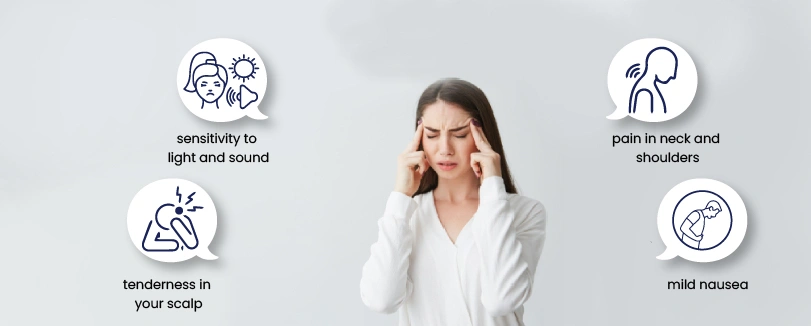
Stress headaches usually start slowly. You might feel a dull, steady pain that feels like pressure or tightness on both sides of your head. Other common symptoms can include:
- sensitivity to light and sound
- tenderness in your scalp
- pain that spreads to your neck and shoulders
- mild nausea, but usually not vomiting
The National Institute of Neurological Disorders and Stroke describes stress headaches as feeling like a belt tightening around the head.
Unlike migraines, these headaches do not cause visual disturbances or severe throbbing.
What Are The Differences Between Stress Headaches And Migraines?
Stress headaches and migraines are similar, but there are some major differences. Migraines often cause severe, throbbing pain on one side of your head. You might also notice nausea or see visual changes called environment. Stress headaches usually feel like a steady, pressing pain on both sides of your head; they rarely come from the environment. When you know the differences, it can help you determine which type of headache you are dealing with.
How To Prevent Stress Headaches
The first step is to notice what tends to trigger stress induced headaches for you. From there, you can try a few simple habits that may help you feel better and support your overall health:
- Maintain a regular sleep schedule.
- Eat a balanced diet and regularly throughout the day for the stress and nervous system.
- Take regular breaks from screens and computers.
- Stretch and move around if you are working on something for a long time.
- Make sure you are drinking enough water.
- Try to limit caffeine and alcohol.
- If you are dealing with ongoing stress, anxiety, or depression, reaching out for help can make a difference.
When To Seek Medical Care
Most headaches due to work stress can be managed at home, but there are times when it’s important to check in with your doctor. Consider making an appointment if you notice any of the following:
- Headaches occur several times a week.
- Pain becomes more intense or changes pattern.
- Symptoms do not improve with over-the-counter medicine.
- You notice vision changes or weakness.
- You have a history of migraines, and new symptoms develop.
If you keep getting headaches, it could mean you are dealing with stress, not sleeping well, feeling anxious, or have another health problem that needs to be checked. Stress that lasts a long time can make you feel pain more easily and make headaches happen more often.
Chronic Stress and Headache Risk
Ongoing stress and anxiety can make your nervous system more sensitive to pain, so headaches may start more easily and last longer. Therapy, stress-management tools, and emotional support can help you cope more effectively and reduce symptoms. Inland Empire Behavioral Group provides these resources to help you manage stress and prevent headaches.
Treatment Options at Inland Empire Behavioral Group
Stress headaches can disrupt your daily routine in many ways. At Inland Empire Behavioral Group, we provide compassionate care that fits your individual needs. Our team offers several treatment options to address both the physical and emotional effects of stress-related headaches.

Read More: Weird Physical Anxiety Symptoms You Shouldn’t Ignore
Personalized Counseling and Support
A therapist can meet with you one-on-one to help find out if stress or anxiety is linked to your headaches. In these private sessions, you can discuss your challenges. You might also consider group sessions, where you can connect with others who understand what you are experiencing. Both options can help you feel supported and less alone.
Cognitive Behavioral Therapy (CBT)
CBT is an important part of how we treat headaches. During these sessions, you and your therapist examine the thoughts and feelings that contribute to your stress. You collaborate to identify patterns and find new ways to address complex situations. This can lower anxiety and help you feel more confident managing stress.
Biofeedback and Relaxation Skills
Biofeedback training is a way to help you notice how your body responds to stress. With support, you can learn techniques to relax your muscles and quiet your mind. Over time, these skills may help reduce the frequency and severity of headaches.
Stress Management and Lifestyle Education
Our stress management sessions teach simple ways you can handle stress in your daily life. We also talk about sleep and healthy eating, since these are important for how you feel. You will receive guidance that works for you, including strategies for managing stress and preventing headaches before they start.
Collaboration with Medical Providers
If there is a need for medication management to reduce stress and provide peace of mind, we can connect you with a medical professional to discuss your options. This way, you get care that fits your needs. Our goal is to help you find relief from stress headaches and feel better day to day.
Connect with us to learn more about how we can help you manage daily stressors. Our psychiatrists are qualified enough to guide you and support you in your life. Stress is a common trigger that affects everyone, but when it is prolonged, it can cause serious problems. We understand your situation, will listen to you, and present you with helpful therapies.