
Have you ever said yes when you wanted to say no? You stayed silent to keep the peace, or pushed your needs aside to make others happy?
If so, you’ve experienced self-abandonment!
Self-abandonment is a form of self-neglect that can impact your mental and emotional well-being. It is an internal fight where you prefer other choices more than your own emotions, needs, and boundaries. It is an internal painful feeling, where you leave yourself over and over again in exchange for love, safety, or approval.
“The deepest cost of self-abandonment is losing touch with who you are.”
— Positive Psychology.
It is often mistaken for kindness or compromise, but it’s a subtle pattern that can quietly erode your confidence, emotional stability, and relationships over time.
Understanding what self-abandonment looks like, where it comes from, the signs to recognize, and how to heal from it can be a turning point for your mental well-being.
What is Self-Abandonment?
Self-abandonment is the act of suppressing your own needs, feelings, emotions, and desires to avoid conflicts or to stay connected. In other words, it’s like not listening to the inner voice and prioritizing to please others. In psychological terms, it’s basically a bypass of the self, where your sense of self is fused with meeting external expectations for others.
What Are the Signs of Self-Abandonment?
Self-abandonment shows up everywhere, and it severely impacts life. Here are some of the common signs of self-abandonment:
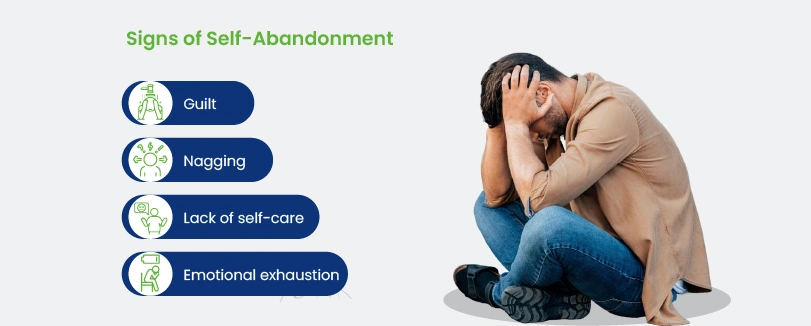
- Guilt for being happy when someone else is sad.
- It looks like holding back your opinions, your needs, because you’re afraid it might upset someone.
- People-pleasing behavior
- Emotional exhaustion
- Nagging
- Constantly adjusting to avoid conflicts
- Keeping your opinion to yourself to maintain peace
- Self-numbing the feelings by being busy, such as doing work, or doomscrolling
- Being a chameleon, by saying yes to everything just to be loved
- Lack of self-care
- Talking harshly to the inner self, which scratches away the self-worth
- Perfectionism tendency, going at every cost just to prove to others that they are worthy of their time.
- Constantly seeking validation or reassurance while making any decision.
The Roots of Self-Abandonment
Self-abandonment developed in childhood, as childhood is not always a period of joy and happiness; it shapes the overall perspective of life and what we become as adults. If a child is raised by a parent who was depressed, anxious, unpredictable, or emotionally unavailable, they learned that expressing their true self might lead to conflict.
Here are some of the causes of self-abandonment, which include:
1. Emotional Neglect
If the feelings of the child are consistently ignored or mocked. They internally believe that your emotions were “wrong” or invalid. In order to survive, the child learned to suppress their feelings and emotions. It eventually leads to self-abandonment.

2. Insecure Attachment Styles
Your experiences as a child might lead you to become over-pleasing to keep someone close because you feared being left alone.
3. Avoidant Attachment
It remains in the subconscious mind of the child that relying on others leads to disappointment. So you abandoned your need in adulthood to remain hyper-independent.
4. The “Orbiting” Child
Living with emotionally unavailable parents may have a strong impact as the child learns to “orbit” the parent’s moods, to keep the peace.
5. Cultural or Family Conditioning
If in childhood you have been praised for being good or selfless, as an adult, you may have thought that having no needs is the only way of being worthy to be loved.
6. Fractured Self-Trust
Choosing others’ opinions and happiness all the time makes you lose your ability to recognize your ‘Gut’ feelings. It is because you are ignoring your feelings for a long time and forgetting to recognize them.
So, ultimately, abandoning yourself is a coping mechanism that was once necessary for safety in childhood but becomes destructive in adulthood.
The Hidden Cost of Self-Abandonment
Self-abandonment severely impacts everyday life; it’s a chronic habit of neglecting oneself and prioritizing others. It severely impacts the relationships with friends and family and leads to mental and physical health issues.
- Unsustainable Relationships: Self-abandonment often leads to people-pleasing because they may feel like they will be left alone. However, it results in unbalanced relationships where they feel used, unappreciated, or distant from partners.
- Erosion of Self-esteem: Abandoning your needs constantly causes difficulties in making decisions or trusting your own instinct, which eventually leads to confusion & insecurity. All these aspects ultimately lead to mental health issues, such as depression.
- Emotional Dysregulation: Suppressing your emotions for a long period of time in order to avoid conflict ultimately leads you to internal chaos. If the emotional needs remain unmet, feelings of emptiness, anxiety, depression, and disconnection often grow stronger.
- Burnout: Constantly putting in effort makes you feel exhausted. And this pattern creates intense resentment for not meeting needs you never expressed.
- Physical Health Issues: The excessive stress and self-neglect lead to chronic fatigue. It may lead to digestive issues, chronic headaches, and weaken the immune system.
How to Stop Abandoning Yourself?
Feeling abandoned is a learned behavior from childhood that can be unlearned and changed. Any habit that we formed in our childhood can be changed, but it requires some time. Unlearn these habits by trusting yourself, focusing on the areas of self-care, self-exploration, and self-expression.
Love Yourself
Replace all the negative thoughts with positive affirmations. Make yourself think like you are worthy of everything. Treat yourself with love as you want to treat your loved ones. You cannot love others if you will not love yourself. Eventually, you’ll be able to admit, correct, and laugh about mistakes instead of letting them define you.

Re-parent the Inner Child
Self-abandonment begins as a survival strategy in childhood. The healing involves the care and protection you may not have received in the early years of life. Reparenting the inner child, validating the younger self that still feels unsafe.
Understand Yourself
Understand what you truly are, and make yourself the priority. Sit alone sometimes and think about who you are, and what you want in your life. Ask questions of yourself, admit your mistakes, and move on with the new version of yourself. Forget the old dreams and discover the joy in life.
Find your Inner Self
Speak to yourself to find your inner voice. Practice asking for something, no matter how small at first, and don’t stop asking until you get it. Learn to set boundaries in your life to be at peace. Boundaries help you shift around at first until you know where the healthiest lines should be drawn.
How Professionals Can Help in Managing Self-Abandonment?
A mental health professional can help in managing this issue. As they diagnose the exact condition by using condition questionnaires with the individual who is suffering. They look at the signs and also conduct an interview with the parents and caregivers to trace the self-abandonment back to its origins, such as childhood.
Moreover, they recommend some therapies to overcome and manage the symptoms, which include:
Cognitive Behavioral Therapy (CBT), which helps you identify and challenge the “internal thoughts” that tell you your needs are less important than others.CBT changes these negative thoughts into positive thoughts. It’s an evidence-based therapy that reduces the stress, anxiety, and depression that occur because of self-abandonment.
Modern therapeutic approaches like Internal Family Systems (IFS) also help in focusing on “reparenting” the younger parts of the child where you have felt unsafe or neglected, replacing self-criticism with nurturing.
Furthermore, EMDR therapy for trauma: For many people, abandoning yourself is a survival response to trauma. EMDR therapy helps process these memories at a neurological level, reducing the hypervigilance that triggers people-pleasing behavior. Moreover, professional experts help you build trust in yourself through small and consistent steps, through which you’ve lost yourself in the past.
Get Help at Inland Empire Behavioral Group
Self-abandonment rarely begins as a conscious choice. It often starts as a survival strategy. Yet it can be managed with the right support. If you feel like you are just a “ giver” in the relationship, or if you remain stressed most of the time, get professional help immediately.
At Inland Empire Behavioral Group, we have a team of certified professionals who will provide exceptional psychiatric treatments tailored to your needs. So, whether you are struggling with anxiety, depression, trauma, stress, or any other mental disorder, we are here to help. We will guide you through your options, recommend therapies or medications as appropriate, and schedule follow-up appointments to support you along the way. You can also get treatments from the comfort of your home through our telehealth services.
Connect with our experts & book your initial consultation now!
Closing Thoughts
Learning to stop abandoning yourself means beginning to live fully, with your truth, emotions, self-worth, and boundaries. It’s a path toward emotional resilience, inner peace, and genuine connection to the inner self. When you choose to show up for yourself, you set the foundation for every healthy choice and relationship that follows in the future.
Healing starts with small acts, and if you feel like things are getting out of control, get professional help, as they can help you manage these symptoms in a better way.