
Imagine having a safe place while experiencing a mental health problem! A space where you are heard, validated, and strengthened without pressure to “dig deep” into painful memories immediately.
That’s how supportive psychotherapy works!
Supportive psychotherapy is a type of therapy in which interventions are made to lower depressive symptoms. It helps individuals by expressing encouragement and optimism, building a supportive connection, and enhancing their self-esteem.
It is often known as the “Cinderella psychotherapy ”, as it is one of the most effective methods that helps treat psychiatric conditions.
This therapy is really helpful for people who need emotional stability.
Why is Supportive Psychotherapy Important?
We can understand its importance with a scenario of a female cancer patient receiving chemotherapy for her recurrent disease. People experiencing severe conditions are often reported by the presence of anxiety and depression. So, this therapy helped her reduce the level of anxiety and depression and improve her quality of life. Psychotherapeutic interventions were made along with chemotherapy to promote positive mental health and stability.
Its concept was presented early in the 20th century, but in recent years, the psychotherapy domain has grown. The main goal is not to change one’s personality but to cope with subjective distress and behavioral dysfunction. It provides support to the affected person and helps restore psychosocial functioning.
Supportive psychotherapy eliminates emotional distress by building a professional relationship without interfering with past or one’s personality traits.
It is difficult to define Supportive psychotherapy in certain words, but it has an important role in the lives of people who are medically ill. This therapy helps people to enhance and strengthen their coping skills by fostering autonomy in treatment decisions.
The Uses of Supportive Psychotherapy
Supportive psychotherapy is a collection of techniques or rules to improve the quality of life. It is basically a set of objectives and a treatment plan between the therapist and the recipient. Here is how it can be used:
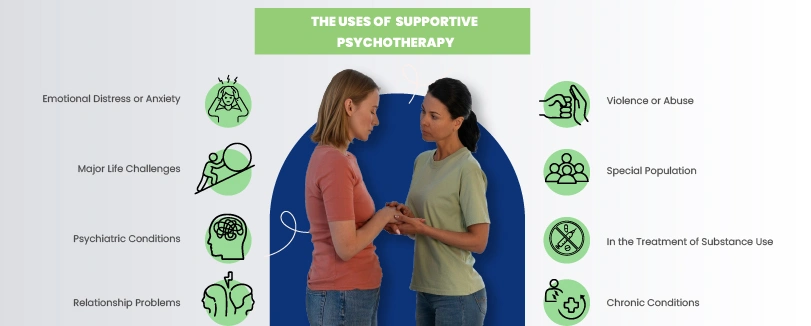
- Emotional Distress or Anxiety
Supportive Psychotherapy is a symptom-focused approach. It can be very useful in treating emotional distress and anxiety in depressed individuals with specific goals in mind. As it reduces stress by involving the therapeutic activities that relieve the individual’s anxiety and encourage behavioural changes.
- Major Life Challenges
This psychotherapy has also helped to deal with major life challenges such as, health problems, the death of a close family member, financial difficulties, and relationship problems. It can help by fostering verbal expression of emotion and thoughts.
- Psychiatric Conditions
Passing through a traumatic event, such as a medical condition, domestic violence, abuse, or a traffic accident, that has lasting effects, can get help from this therapy. Also, a psychiatric disorder in which an individual is mentally ill, such as schizophrenia, depression, or anxiety, can be treated effectively with this psychotherapy. It will help individuals by managing symptoms associated with their condition and will improve their emotional well-being.
✓ Coping Skills & Stress Management
✓In-Person & Telehealth Options
✓ Most Major Insurances Accepted
- Relationship Problems
This psychotherapy is really helpful for individuals who are facing relationship problems by encouraging them to build their self-esteem and worth. It promotes insight by facilitating self-grooming when appropriate.
- Violence or Abuse
This therapy helps victims of violence or abuse by providing support and guidance to come out of incidents. It helps them by reframing negative emotions and self-blaming and provides a more balanced perspective.
- Special Population
Specific populations, which may include individuals in jails, transgender individuals, and people who are at risk of some disease, also get help through supportive psychotherapy. The therapist should give choices and recommendations for treatment of their choice to individuals so that they feel supported and encouraged.
- In the Treatment of Substance Use:
Before counseling, therapists should spend more time in the engagement phase to maintain a safe relationship and trust building between the patient and therapist. Supportive psychotherapy may prove more beneficial than any other therapeutic practice for helping people with substance abuse.
- Chronic Conditions
People who are suffering from a serious chronic condition or who are seriously affected or handicapped are the ones who need supportive psychotherapy sessions along with their other medications.
This therapy may help individuals feel supported and encouraged by teaching them how to make changes in their daily routines. It improves their lifestyle and develops skills that are important for them. In the same way, it helps chronically ill individuals to cope with their illness and improve their quality of life by making changes in their routine
What are the Techniques of Supportive psychotherapy?
Supportive psychotherapy is based on some techniques, which are as follows:
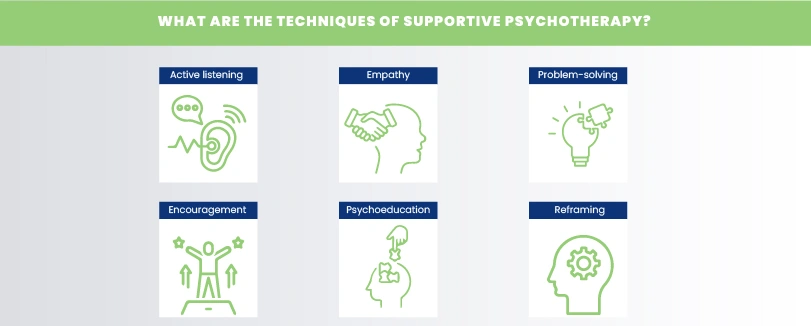
Active listening
In this technique a mental health professional allows individuals to get away from their suppressed and difficult thoughts. The psychiatrist listens carefully to the concerns of the person and validates their feelings.
Empathy
A mental health empathy and understanding towards the situation of the patient. They make them understand their feelings and help them feel supported.
Encouragement
The mental health professional provides encouragement and positivity to make the patient. It helps them build self-confidence and a sense of fulfillment.
Psychoeducation
The mental health professional helps individuals by providing them information about mental health conditions. They help patients by offering coping strategies and to develop greater insight and understanding.
Problem-solving
In this technique a mental health professional helps patients by addressing their specific problems or challenges.
Reframing
This technique helps individuals to reframe their negative thoughts and look at their issues with different perspectives. The psychiatrist helps the patient to view their situation from a different perspective. The patient reframes their negative thoughts into positive and desirable thoughts.
Conditions Treated Through Supportive Psychotherapy
Supportive therapy is very beneficial for people who are struggling with serious mental health conditions. It is ideal for individuals who require a safe and non-judgmental space to strengthen coping skills and enhance their daily functioning.
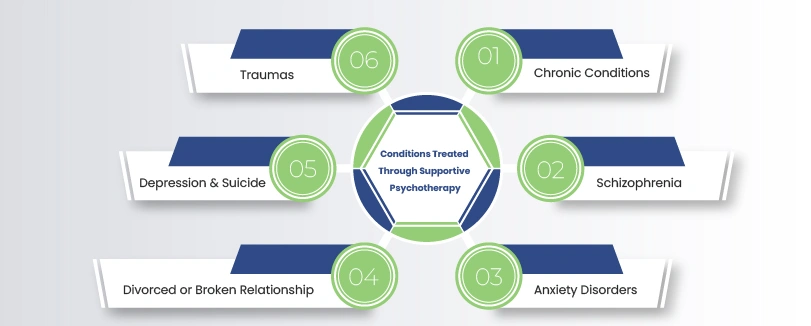
1. Chronic Conditions
Individuals with serious health complications should get psychosocial interventions and therapy sessions to reduce their symptoms. It further prevents complications of the disorders. People can adapt supportive therapy techniques to improve their everyday lives.
2. Schizophrenia
Schizophrenia is a mental disorder in which individuals hear voices and experience delusions. In this psychiatric condition, people are less socialised and find it hard to work with others because of their behavioural changes. Therefore, supportive psychotherapy in this regard can help them to cope with such conditions by providing general support, encouragement, and listening to their feelings and fears.
3. Anxiety Disorders
This psychotherapy helps to mitigate anxiety symptoms by engaging in activities to lessen the emotional distress or fatigue. It involves realistic evaluation through active participation. Therefore, it can help in reducing stress levels and improving performance without discussing past experiences.
4. Traumas
People who have experienced traumas, such as the death of a loved one, which affect them emotionally as well as physically, can get help from this psychotherapy. Supportive therapy in this regard also proves helpful as it ensures its effectiveness through consistent support. It provides patients with a safe space to express their grief and memories of loved ones.
This therapy assesses the patient where the patient is psychologically at the stage of life, and what are the causes for the patient’s feelings about the end of life. So in this matter, a mental health expert designs a plan to help overcome the distress and anxiety towards his mental state.
5. Depression & Suicide
Supportive psychotherapy uses direct interventions to reduce psychiatric symptoms by listening to an individual’s issues. It improves their mental health by making them understand coping mechanisms to resolve their problems. This psychotherapy is the best treatment option, which promises to eliminate suicidal thoughts by treating depression, managing moods, and improving quality of life.
6. Divorced or Broken Relationship
This therapy provides emotional support in such conditions that enable individuals to come out of their traumatic incidents. It teaches them to engage in different activities, to stay engaged, and to enhance their skills. Supportive therapy enables patients to know their self-esteem and worth.
How Effective is Supportive Psychotherapy in Mental Health?
Supportive Psychotherapy plays an important role in mental health as it is considered the treatment of choice. It is often used in combination with medications to get effective treatment. Supportive psychotherapy is evidence-based, and the most interesting thing is that it doesn’t uncover the personal details of the individual. It focuses less on the deep matters; it is less directive and structured.
This psychotherapy improves the quality of life by providing therapeutic support, building strength, and reducing distress. Moreover, it proves a safe space for those people who are already struggling with chronic conditions and who aren’t ready to get more intensive types of therapy.
Differences from Other Psychotherapies
Supportive psychotherapy vs CBT
Cognitive behavioral therapy is a technique in which a mental health professional and the patient sit together and talk. CBT is a structured therapy that helps in changing the negative, unwanted thoughts into positive, desirable thoughts. Whereas supportive psychotherapy is less structured and works in a more direct way. It is different from other therapies and can also be combined with either therapy for better outcomes.
Supportive Therapy vs. Psychodynamic Therapy
Psychodynamic therapy focuses on uncovering unconscious patterns, emotions, and past experiences, often from childhood. It helps to understand and resolve current psychological distress and behavioral issues. Whereas psychodynamic therapy focuses more on current issues instead of going deep into the past wounds.
Supportive Psychotherapy vs. Psychoanalysis
Psychoanalysis is an intensive and long-term therapy. It aims to focus on uncovering unconscious motivations, desires, and conflicts. This is often used to explore childhood experiences to understand present issues. Whereas supportive psychotherapy is a direct short-term approach that improves symptoms and supports mental stability.
Get Supportive Psychotherapy at Inland Empire Behavioral Group
If you are looking for psychiatric treatments, you are at the right place. At Inland Empire Behavioral Group, we have a team of highly experienced mental health professionals who provide you with the best treatment options. You can get evidence-based solutions if you are facing any psychological problems, such as depression, anxiety, schizophrenia, or bipolar disorder. We offer treatments with a multidisciplinary approach, such as supportive psychotherapy sessions that can help you manage stress and provide emotional stability.
So let us help you find the best treatment for your problems. We also offer telepsychiatric treatments all over California for your ease.
Schedule an appointment now!
Last Remarks
Supportive psychotherapy plays an active and directive role in helping people to improve their psychosocial functioning and coping skills. It doesn’t have the goal of making unconscious processes conscious; in fact, it is the main keystone in all the psychotherapies. It enhances the patient’s capacity to utilise environmental support and reduce behavioural dysfunction. In short, this therapy is the best possible treatment to foster the greatest possible degree of autonomy in the treatment decisions of psychologically ill individuals.