
Most of us experience anxiety at some point in our lives. People might feel anxious before crossing a busy road, making a significant decision, or taking a test. If you experience persistent anxious feelings without a reason or more severe than expected, it might be an anxiety disorder.
Let’s understand its symptoms, causes, and effective treatment.
What Does Anxiety Look Like?
It is the most common emotional and mental health condition. It comes with feelings of unease, such as fear or nervousness, ranging from mild to extreme. In many cases, it can motivate us to keep ourselves safe from harm. However, excessive anxious feelings can interfere with our daily lives and lead to despair, avoidance, and physical symptoms like an upset stomach or shortness of breath.
It is a natural human response to stress or threat. In fact, it is our body’s natural fight-or-flight response that helps us react quickly to potential threats. It is significant to know that feeling anxious is not the same as having a mental health disorder, which is a mental health condition with persistent and intense worry. Persistent or overwhelming anxious feelings can turn into a problematic condition that may interfere with daily functioning. However, there are different treatment options to manage and reduce its symptoms.
What are the Symptoms of Anxiety?
The following are the common signs:
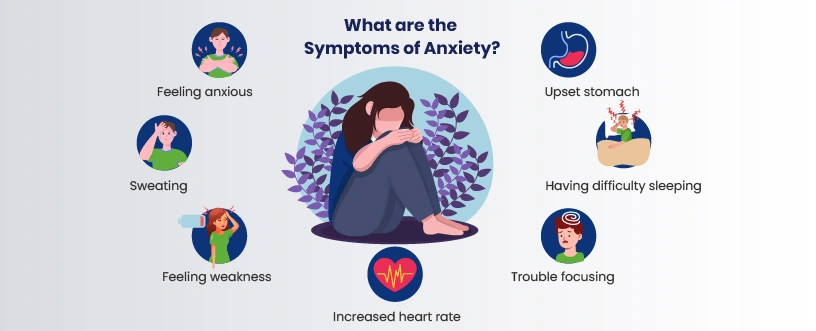
- Feeling anxious, restless, or worried
- Having a sense of approaching danger, panic, or doom
- Increased heart rate
- Fast breathing (Hyperventilation)
- Sweating
- Quivering
- Feeling weakness or tiredness
- Trouble focusing or thinking about things other than worry
- Having difficulty sleeping
- Upset stomach or other digestive problems
- Feeling it is difficult to control worry
- Strong urge to avoid triggering things
What are the Types of Anxiety?
The following are the common types:
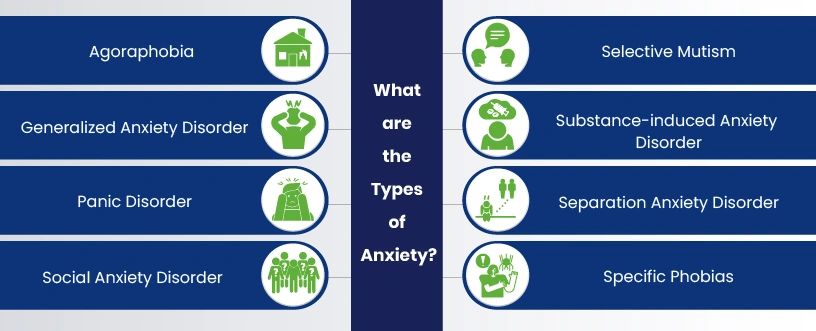
Agoraphobia
Agoraphobia is a type of mental disorder. Individuals with agoraphobia exhibit fear, and often they avoid places or situations that cause them panic and make them feel embarrassed, helpless, and trapped.
Generalized Anxiety Disorder (GAD)
GAD symptoms include persistent and extreme stress and worry regarding daily routine activities and events. The worry in this disorder is out of proportion to the actual circumstances, and it feels difficult to control, impacting how a person feels physically. Moreover, it appears along with other mental health disorders or depression.
Panic Disorder
Panic disorder exhibits repeated and sudden anxious feelings and fear or stress that reach a peak within minutes. Individuals with panic disorder may have feelings of shortness of breath, chest pain, or a rapid fluttering or throbbing heart, and feelings of approaching doom. The panic attacks may lead you to worry about them happening again or try to avoid triggering situations.
Social Anxiety Disorder (SAD)
It is also known as a social phobia, with signs such as heightened fear, stress, and avoidance of social situations. People with SAD avoid social situations due to feelings of self-consciousness, embarrassment, or worry about being judged or viewed negatively by others.
Selective Mutism
This mental health condition is a constant failure of children to speak in particular situations, such as school, even when they are speaking in other situations, like at home with family. This failure to speak can disrupt school, work, and social functioning.
Substance-induced Anxiety Disorder
This disorder is characterized by symptoms of extreme anxiousness or panic that are an immediate result of substance misuse, certain medications, exposure to a toxic substance, or withdrawal from drugs.
Separation Anxiety Disorder
This mental health condition is considered a childhood disorder. It exhibits extreme worry for the child’s developmental level and is connected to separation from parents or others with parental roles.
Specific Phobias
In this condition, an individual may feel major stress when exposed to a specific object or situation and wants to avoid it. Specific phobias can also trigger panic attacks in some people.
Anxiety Disorder Due to A Medical Condition
This condition includes symptoms such as extreme tension or a panic attack that are due to a physical health problem.
What are The Causes of Anxiety?
There is no single recognized reason behind this mental condition, like other types of mental health disorders. But according to mental health care providers, certain factors play a role in its development.
Chemical Imbalance
Numerous neurotransmitters and hormones cause the increasing anxious feelings, including norepinephrine, serotonin, dopamine, and gamma-aminobutyric acid (GABA). An imbalance in these chemicals can cause the development of this mental health disorder.
Changes in the Brain
A part of our brain is called the amygdala, which plays a significant role in handling fear and stress. People with this disorder exhibit heightened amygdala activity in response to their stress and worry.
Genetics
This disorder tends to run in biological families. This means that genetics can play a role in its development. Individuals may be at an increased risk of developing this disorder if they have a first-degree relative with the same disorder.
Environmental Factors
Extreme and long-lasting stress can change the balance of neurotransmitters that control your mood. When you experience a lot of worry and stress for a long time, it can turn into a mental disorder. Experiencing traumatic events in life can also trigger this disorder.
What is Anxiety in Relationships?
This shows persistent worry and fear about partners or romantic relationships. It often involves signs such as abandonment, unworthiness, irrational fears, unfaithfulness, and low self-esteem. It can significantly disrupt your life and well-being.
The following are some common signs:
- Overanalyzing a partner’s tone, delayed text response, or a sudden change in behavior to identify the signs of rejection.
- Seeking constant reassurance and confirmation of love. Overthinking and evaluating whether the relationship will last or not.
- Hiding your requirements, boundaries, or opinions to prevent arguments and keep your partner happy.
- Obsession over flaws and intrusive mental compulsions to understand whether your partner is the one or not.
What Triggers Anxiety?
The following are some factors that can trigger stress.
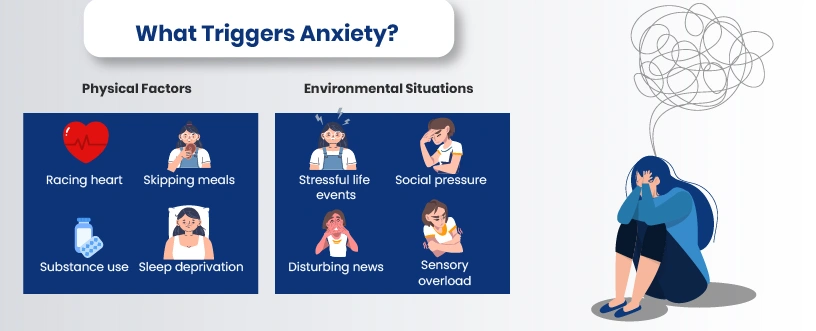
Physical Factors
- Consuming too much nicotine or caffeine triggers physical stress symptoms, such as a racing heart.
- Substance use or withdrawal, such as alcohol or certain recreational drugs, can be the trigger.
- Sleep deprivation or a tired brain. When you struggle to regulate emotions and manage stress creates anxiousness.
- Skipping meals and poor nutrition can cause low blood sugar levels, which triggers your nervousness and stress.
Environmental Situations
- Major changes or stressful life events, such as financial challenges, divorce, or loss of a loved one.
- It can be triggered when trying to handle social pressure, like meeting new people or navigating difficult conflicts.
- Disturbing news or excessive media consumption can also be a trigger.
- Crowded spaces, overwhelming environments, or loud noises can disturb your nervous system.
Psychological State
- Reactivation of unprocessed past emotional or physical trauma can lead to a sudden surge of anxious feelings.
- Continuous negative thoughts, self-criticism, or expecting the worst-case scenario.
- Suppressed feelings or emotions such as anger, grief, or unexpressed requirements.
Medical Conditions
- Underlying health conditions like diabetes or heart disease.
- Specific medications can cause anxious feelings as a side effect.
When to Seek Professional Support?
Seek professional support when feelings of worry and fear interfere with your daily life, you’re struggling to maintain a relationship, or you’re having challenges with work and sleeping. You must ask for help from a professional mental health psychiatrist when your symptoms persist more than expected.
Main signs that show you need to reach out:
- Persistent worry is preventing you from performing routine tasks or concentrating on work or at school.
- You continuously feel anxious and are unable to control your worrying thoughts.
- You are preferring avoidance behavior towards places, people, or situations due to fear.
- Feeling physical symptoms such as headache, dizziness, racing heart, or insomnia.
- You adopt unhealthy coping ways, like relying on drugs or alcohol, to manage your anxious feelings.
- Suicide or self-harm thoughts are an emergency sign that you need professional help.
How to Treat Anxiety Effectively?
Psychotherapy for anxiety is one of the most effective treatments to reduce nervous feelings. It is also known as talk therapy, with a variety of anxiety management techniques. Moreover, it helps you recognize and transform negative emotions, thoughts, and behaviors. A mental health psychiatrist will talk through strategies to help you understand and manage your mental condition. These therapy approaches include:
Cognitive Behavioral Therapy (CBT)
Cognitive Behavioral Therapy (CBT) is one of the most practical and structured psychological therapies. It focuses on the fact that feelings, behaviors, and thoughts are connected to each other. The main purpose of CBT is to recognize helpful thought patterns and change the behaviors that exacerbate your stress. It is an action-oriented approach that concentrates on the present. This therapy follows these steps:
- Identifying the negative thought patterns or cognitive distortions that are triggering anxious feelings.
- Helps in cognitive restructuring. It challenges the reality of these anxious thoughts and replaces them with realistic and balanced ones.
- You can test your anxious predictions in real life with behavioral experiments. It lets you see if your fears actually come true.
- It helps you slowly and safely expose yourself to the situations, objects, or sensations that are triggering anxious feelings. You can build tolerance and reduce avoidance behavior with this therapy.
Dialectical Behavioral Therapy (DBT)
Dialectical Behavioral Therapy (DBT) is also an effective treatment. It is primarily created to treat Borderline Personality Disorder, but can also manage and reduce anxious feelings with its hands-on and skill-based approach. Its main focus is to create a balance between accepting anxiousness without judgment. It teaches you four skill sets, such as distress tolerance, emotion regulation, mindfulness, and interpersonal effectiveness. The following are the coping strategies for anxiety:
- Teaches you anxiety grounding techniques like mindfulness. This keeps your mind from twisting into fears regarding future or past circumstances.
- Distress Tolerance techniques offer physical and mental tactics to survive extreme panic attacks without impulsive behavior or making the situation worse.
- It helps you regulate emotions, understand, reduce vulnerabilities, and handle extreme emotions better than letting your feelings dictate actions.
- It trains you to manage social problems and disputes effectively. So you can overcome social stress in relationships and social situations.
Exposure Therapy
Exposure therapy is also a type of psychotherapy treatment. It helps you to face your worries and break patterns of avoidance. Your psychiatrist will expose feared objects, situations, or thoughts to help your brain learn how to tolerate triggers safely. It works by helping you in:
- Breaking avoidance behavior that provides only short-term relief but worsens the fear over time. This therapy safely changes this cycle.
- Facing the fear repeatedly allows your nervous system to adjust naturally. This will eventually reduce the anxious response.
Overcome Your Stress with Professional Support
Remember, it is normal to feel anxious sometimes. But if your symptoms last for a long time or interfere with your daily functioning, it may be a sign of a serious mental disorder. The good news is that extreme stress can be treated through psychotherapy or with a combination of medications or therapies. If you or someone you know is experiencing intense worry, you must reach out to a mental health psychiatrist.
Inland Empire Behavioral Group is one of the most trustworthy mental health providers in California. We offer comprehensive mental health services both in-person and through telepsychiatry. Our team of licensed psychiatrists will thoroughly evaluate your condition and create a personalized treatment plan.