
Estrogens are a group of hormones that play an important role in the normal sexual and reproductive development in women. It is also important for men.
The estrogen levels naturally change during different life stages. It acts as a catalyst for profound shifts in mood, cognitive ability, and emotional resilience.
Understanding the intricate relationship between estrogen and mental health is crucial for navigating life challenges, such as puberty, pregnancy, and menopause. At this stage, the hormonal dips can lead to anxiety, depression, and cognitive “brain fog”.
What Estrogen Is!
Estrogen is a hormone that was first isolated and characterized in 1929 by Tadeus Reichstein, Adolf Butenandt, and Edward Adelbert Doisy, known as the female hormone. Estrogen plays an important role in brain functions, neurodevelopment, and neuroplasticity in adults. Cognition, learning, and memory are also under the control of estrogen.
Types of Estrogen
There are three major forms of estrogen:
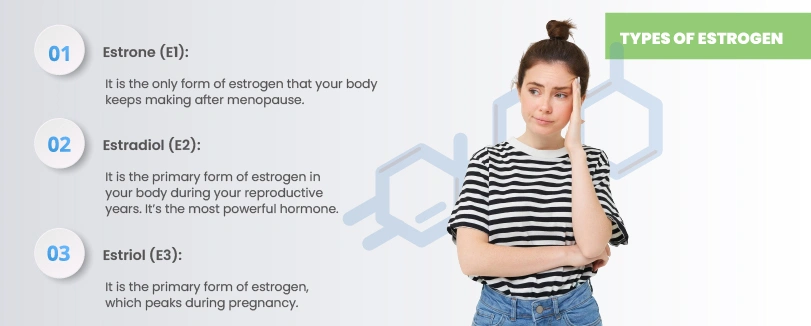
Estrone (E1): It is the only form of estrogen that your body keeps making after menopause.
Estradiol (E2): It is the primary form of estrogen in your body during your reproductive years. It’s the most powerful hormone.
Estriol (E3): It is the primary form of estrogen, which peaks during pregnancy.
Estrogen: A Key Regulator
Estrogen regulates multiple neurotransmitter systems in the brain. It controls signaling mechanisms and interactions with multiple neurotransmitters, including dopamine, serotonin, and glutamate. Therefore, it has a serious involvement in mood regulation and cognitive functions.
It has been reported that estrogen has physiological functions involved in the development of breast tissue and sexual organs. This hormone also regulates the menstrual cycle and reproduction, and maintains our bone density.
The Production of Estrogen
Estrogen is produced in the ovaries and placenta in premenopausal women as a female hormone and in the corpus luteum from testosterone. It is also produced by fat cells and adrenal glands. Liver, heart, skin, adipose tissue, and brain are also the sites for the production of estrogen.
How Estrogen Impacts Women’s Health?
Estrogen acts to modulate many areas of the brain and has dominant effects on cognition. The role of estrogen in the brain is particularly significant for women’s fitness, as many women face marked changes in psychological processes. It performs various roles in each tissue; therefore, women’s health is highly influenced by estrogen management. Estrogen is involved in puberty, fertility, the menstrual cycle, brain development, and neuroprotection.
How Estrogen Affects the Brain?
Psychological disorders caused by these fluctuations are usually chronic and may result in decreased quality of life and functional disabilities. This hormone is highly involved in the pathobiology of behaviors and mood regulation. Low estrogen levels could increase their risk for depression. It directly affects serotonin in the brain, as serotonin helps control mood, hunger, and sleep. Estradiol, which is the active form of estrogen, boosts serotonin by making more and ceasing to function. This is why transitions in estradiol can influence our mood and emotional control.
Moreover, in younger postmenopausal women, low levels of estrogen, acetylcholine, and serotonin can cause depletion in episodic memory, and adequate levels of estrogen reverse these effects.
Receptors of estrogen are located in the main areas of the brain, indicating a direct effect on neurological functions. As estrogen interacts with neurotransmitters, it affects mood. This hormone also interferes with serotonin, dopamine, and norepinephrine, which are the neurotransmitters closely linked to mood regulation.
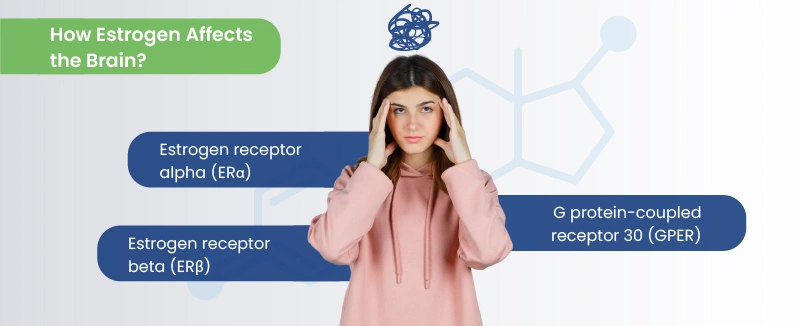
Estrogen receptors in the brain:
Estrogens maintain their functions via estrogen receptors. There are currently three known categories of receptors
- Estrogen receptor alpha (ERα)
- Estrogen receptor beta (ERβ)
- G protein-coupled receptor 30 (GPER)
The Neurotransmitter and Cognitive Regulation
Estrogen has effects on neurotransmitter systems in our brain and also has some neuroleptic-like properties, which stimulate most of the neurotransmissions and mediate the cognitive functions. The neurotransmitters like dopamine, serotonin, oxytocin, and endorphins are boosted by estrogen, which are involved in mood, memory, and cognition.
Serotonin: it is the increase of the mood-altering chemical serotonin and the number of serotonin receptors in the brain. This hormone and neurotransmitter help regulate your mood as well as your sleep, appetite, digestion, learning ability, and memory.
Dopamine: Known as the “feel-good” hormone, dopamine is a neurotransmitter that’s an important part of your brain’s reward system. It’s associated with pleasurable sensations, along with learning, memory, and more.
Endorphins: These hormones are your body’s natural pain reliever, which your body produces in response to stress or discomfort. Levels may also increase when you engage in reward-producing activities such as eating or working out.
How Hormonal Shifts Influence Mental Health?
Hormonal shifts can really influence mental health. By figuring out estrogen’s function in emotions, we can handle life’s changes with transparency. Estrogen stimulates the brain, keeps the neurons releasing, assists the growth of new cells, and helps existing cells to form new links.
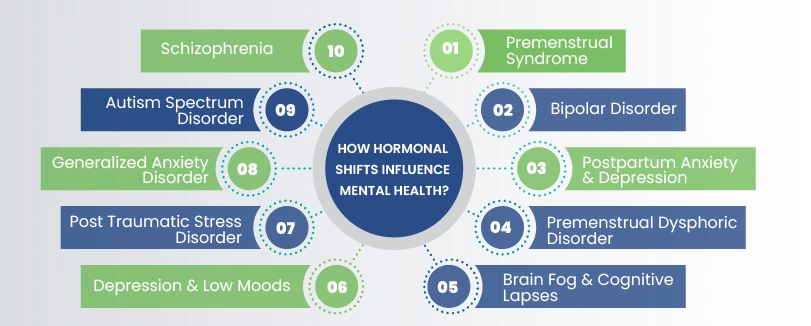
If the estrogen level declines in midlife, the whole body, including your brain, also undergoes a sudden deprivation state. On the cellular level, estrogen forces the brain cells to burn more glucose, which is their main fuel. However, this results in an overall decline in brain power levels during menopause, which can lead to hot flushes, night sweats, anxiety, depression, and brain fog.
Here are some of the common mental health disorders that usually occur because of disturbances in estrogen levels:
1. Schizophrenia
Schizophrenia is a psychological condition caused by low plasma estrogen levels specially in women. During the menstrual cycle, estrogen levels cause more psychological symptoms in women who have schizophrenia.
2. Autism Spectrum Disorder
ASD is a neurodevelopmental condition that starts early in childhood. Autism Spectrum Disorder causes difficulties in communication and interaction with others. In this condition, children possess lower sensory processing and show repetitive behaviors.
3. Generalized Anxiety Disorder
GAD is characterized by unreasonable, ongoing stress and anxiety that slows down daily functioning. The illness is twice as prevalent amongst women as it is amongst men. Imbalance of estrogen levels signaling in GAD. A study reported increased GPER levels in GAD, which were further linked with the rigor anxiety in patients.
4. Post Traumatic Stress Disorder
PTSD is conceived after facing a traumatic event and is characterized by severe anxiety, nightmares of trauma, and flashbacks of that event. Women, being more sensitive, have a twice-higher prevalence of the disorder than men following trauma.
5. Depression & Low Moods
Depression affects people in various ways, but women are more likely to get it than men. This is a famous fact that requires more study. It’s important to know why women get depression more often. Hormonal changes, like those in estrogen, play a big role. When estrogen levels decline, serotonin regulation is also affected, which contributes to increased crankiness and distress.
Similarly, lower progesterone levels can cause irritability, anxiety, or mood swings that will make it very difficult to handle things you normally do. In this way, these hormonal fluctuations can set off a depressive attack, particularly for those who’ve gone through major sadness in the past.
6. Brain Fog & Cognitive Lapses
When you are unable to concentrate on things, and you can not get anything you are searching for, then you are affected due to brain fog. Brain fog usually impacts females undergoing the menopausal transition, also referred to as perimenopause. This is the phase before the start of menopause.
Estrogen regulates the function of our brain, such as being the regulator of chemical messengers that enhance learning and memory. Being protective in nature, estrogen also shields our brain cells and nerve cells from damage. The corresponding drop in serotonin can lead to feelings of stress, depression, or anxiety
7. Premenstrual Syndrome
90% of women have unpleasant symptoms before their periods. If these symptoms are bad enough to disrupt your quality of life, then we can define it as premenstrual syndrome(PMS).
Premenstrual syndrome (PMS) is a condition in which women consistently have physical and emotional symptoms. These symptoms occur a few days before their period but go away afterwards. These symptoms are usually considerable enough to affect school, work, or other daily activities. Physical symptoms like stomach (bloating), pelvic discomfort, and cramps, as well as mood issues, occur because of PMS.
8. Premenstrual Dysphoric Disorder
Premenstrual dysphoric disorder (PMDD) is characterized by the more severe emotional symptoms eclipsed by less physical symptoms than typical PMS. 3%-9% of women have PMDD. Estrogen is also involved in these mood disruptions, it occurs 1-2 weeks before menstruation.
9. Postpartum Anxiety & Depression
Postpartum depression is an official diagnosis in the DSM, known as major depressive disorder with peripartum onset. 10%-25% of women undergo a major depression within the first 6 months after childbirth. Estrogen levels decline in postpartum, especially with breastfeeding. While a decline in estrogen can be linked to a decline in mood.
10. Bipolar Disorder
Bipolar disorder is characterized by cycles of obsession and depression. The disorder is classified as Bipolar I disorder, followed by more severe mood outbreaks, from obsession to depression. Bipolar II disorder, in which less intense episodes of hypomania occur, which alternate with intense depression. It has been reported that women with bipolar disorder, during periods of hormonal changes, are linked with more vulnerability to depression and increased risk of affective dysregulation.
Estrogen as a Protective Hormone
Estrogen performs protective actions on the body as well as the brain, especially in areas associated with mood regulation and memory. Estrogen also involves increasing endorphins levels in the bloodstream and for the brain by increasing endorphin levels in the bloodstream and the brain. Analysis proves that it also improves neural plasticity. Neural Plasticity is the ability of the brain to change structurally and functionally. It allows an individual to learn, remember, forget, and recover from injury.
Estrogen represents its neuroprotective effects on the brain by promoting the synthesis of neurotrophins and protecting the brain from stress and inflammation. It also performs antioxidative effects, apoptosis, and protection against excitotoxicity. Estrogen increases glucose metabolism by having a regulatory role in the cerebral blood flow and can improve the electron transport chain activity to provide excessive energy to neurons located there.
Estrogen has a protective role in neurodevelopmental disorders including autism spectrum disorder (ASD) and schizophrenia
Estrogen & Its Fluctuations
Estrogen levels may fluctuate naturally during different life phases and your menstrual cycle. Consistently high or low levels of estrogen may signal a condition that requires medical attention.
Women are at a higher risk than men of developing mood changes. The increased risk is during reproductive cycle events, particularly during the menopausal transition.
Males are more sensitive to neurodevelopmental disorders, including schizophrenia, autism spectrum disorder (ASD), and attention-deficit/hyperactivity disorder (ADHD), whereas females are more vulnerable to depressive, anxiety, and eating disorders. Numerous factors, which may include social and environmental factors, along with various tracks and locations in the brain, play a role in developing these sex differences.
Hypoestrogenism
Hypostrogenism refers to the condition in which your body doesn’t produce enough estrogen; therefore, your psychological functions are distorted. Estrogen isn’t just about periods or pregnancy; it keeps bones strong, cholesterol in check, and moods steady, among other things. So when its level decreases, you will notice changes in your health.
The following are some changes that you will notice as a result of fluctuations in estrogen levels in your body.
- Premenopause
Low levels of estrogen cause hormonal changes during perimenopause. During this time, the ovaries produce estrogen, which plays an important role in strengthening the reproductive system of the body. The body compensates for this mechanism by producing progesterone from the ovaries as the estrogen level falls. It’s common for hormone levels to fluctuate during perimenopause, to go up and down like a rollercoaster.
- Menopause
Menopause is a hormonal transition in the life of females that occurs as a result of decreasing estrogen levels. As females age, their estrogen production level from the ovaries decreases until menstruation finally stops, which is menopause. The decreased level of estrogen can cause uncomfortable side effects that can last more than ten years following the cessation of the cycle. Menopause can be painful or even intolerable for some women due to the profound impact of declining estrogen levels. However, the symptoms of low estrogen are typically easy to treat.
Treatment Approaches
Estrogen levels can impact day-to-day life and lead to several challenges. It is because the excessive drop and high levels of estrogen can lead to mood swings, stress, and severely impact daily life. Although it’s a highly curable condition with the right combination of treatments. Some of the common behavioral therapies that can help include:
Cognitive Behavioral Therapy: CBT is a highly effective therapy that helps in reducing mood swings, anxiety, and stress. It helps by changing the negative thought patterns into helpful ones. A type of CBT-Meno is also helpful as it specifically targets the stress caused by hot flashes and hormonal mood changes. Additionally, Mindfulness-Based Cognitive Therapy (MBCT) is really helpful for women who are going through emotional breakdowns. MBCT helps build emotional regulation and reduces the stress that can worsen during hormonal fluctuations.
Also, therapies like Hormone Therapy and Estrogen Replacement Therapy are helpful as it provides effective results.
Moreover, medications are also helpful with the combination of therapies, in some cases. The decision depends on the severity of symptoms and how much they interfere with everyday life. Common medications include antidepressants, antianxiety, and antipsychotics.
Bottom line
Estrogen is key in managing mood and emotions. Changes in estrogen can cause mood swings, anxiety, and stress. Knowing how estrogen affects your mood helps you deal with emotional ups and downs. The relationship between estrogen and emotions is complicated. Estradiol, a type of estrogen, affects brain chemistry, including serotonin levels. This can change how you feel generally. Understanding this link helps you know when you need support. Hormonal shifts can really impact mental health. Knowing what hormone causes mood swings in women and how estrogen affects emotions is vital for mental health. Therefore, we should try to keep focus on maintaining hormonal balance, to avoid any fluctuations in estrogen, and stay healthy.
How can the Inland Empire Behavioral Group help?
Estrogen is a multifaceted hormone that plays crucial roles in female sexual and reproductive health. It is essential to maintain overall well-being. If you feel like you are experiencing depression, mood fluctuations, or any other mental health issue. Get help at Inland Empire Behavioral Group.
Our highly expert team of professionals diagnoses the condition and recommends treatments as per the severity of the condition. We offer a safe and secure space where you can talk about your issues without the fear of judgment.
Contact us now!