
Schizophrenia and psychosis are often used interchangeably, but they are not the same. Schizophrenia is a specific, long-term illness that includes psychosis as one part of the larger pattern. However, psychosis is a symptom defined as a break from reality that can show up in a person’s thoughts, senses, and beliefs. Precisely, everyone with schizophrenia goes through psychosis. Most people who experience psychosis do not have schizophrenia.
Treatment for both conditions typically combines medication and therapy. Most common approaches include Cognitive Behavioral Therapy, Dialectical Behavior Therapy, and family therapy. This guide covers the causes, symptoms, and treatment options for both of these conditions.
Psychosis vs Schizophrenia – Major Difference at a Glance
The table below gives a quick overview of both these conditions:
| Key differences | Psychosis | Schizophrenia |
| What is it? | A symptom or cluster of symptoms | A long-term psychiatric illness |
| Stands alone as a diagnosis? | No | Yes |
| How long does it last? | From hours to weeks depending on the trigger. | Persistent Long-term |
| Hallucinations and delusions | The defining feature | Appears as one symptom |
| Flattening emotion and low motivation | Not a defining feature | A core feature |
| Focus or decision-making problems | Not a defining feature | Common |
| Does it go away fully? | Often yes | Do not go away completely. |
| What drives it? | Dozens of possible triggers | Genetic, brain development, and environment. |
| How is it treated? | Medication and therapy | Long-term therapy and medication |
What is Psychosis?
This is a medical state in which a person loses touch with reality. A person may see or hear things that are not there or believe things that are not true. In addition to these, confused thoughts and unusual behaviour are also common in people with this disorder.
Psychosis is not a mental illness on its own. It can occur with other conditions, such as schizophrenia, bipolar disorder, and major depression with psychotic features. However, early diagnosis can help reduce symptoms and improve recovery.
What Is Schizophrenia?
This involves hallucinations, delusions, disorganized thinking, unusual physical behaviour, and reduced emotional expression. People may believe that someone is monitoring them or might cause them harm. These factors are often confusing, isolating, and frightening.
A person with this disorder finds it hard to go to school or work, socialize, or take care of themselves. However, getting therapy and medication can help to manage the condition and let you live a fulfilling life. The symptoms start between the ages of 16 and 30. According to SAMHSA, symptoms of schizophrenia start in late teens and early twenties in men. However, in women, they start in their mid-twenties to early thirties.
Psychosis vs. Schizophrenia: Types Compared
Here’s how each condition breaks down into distinct types.
What Are the Types of Psychosis?
The types are divided into the following categories depending on the driving factor:
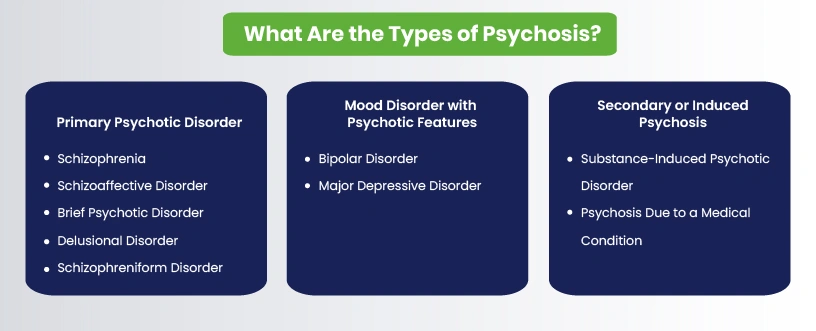
1. Primary Psychotic Disorder
This comes from the psychiatric disorder itself, not from substance use or a medical condition. This includes the following:
These involve the conditions where Psychosis is the major cause of a condition. The conditions are given below:
- Schizophrenia
- Schizoaffective Disorder
- Brief Psychotic Disorder
- Delusional Disorder
- Schizophreniform Disorder
2. Mood Disorder with Psychotic Features
The mental health conditions in which psychotic symptoms occur only during episodes of mood disorders. They include:
- Bipolar Disorder
- Major Depressive Disorder
3. Secondary or Induced Psychosis
This type results from an identifiable underlying cause, such as:
- Substance-Induced Psychotic Disorder
- Psychosis Due to a Medical Condition
What are the types of Schizophrenia?
It was traditionally classified into the following subtypes:
- Paranoid
- Disorganized
- Catatonic
- Undifferentiated
- Residual
The DSM-5 manual by the American Psychiatric Association eliminated the above types in 2013 because they weren’t stable over time and didn’t reliably guide treatment decisions. Today, clinicians describe this disorder using the following factors:
- Course of the condition: It describes whether the person is experiencing a first episode, has had repeated episodes, or has ongoing symptoms. It also shows if the symptoms are active, improving, or under control.
- Symptom severity: Every major symptom is assessed individually to determine its severity.
- Catatonia as a specifier: Unusual movement or behavioural patterns are called Catatonia. This condition is treated as an additional feature rather than a type of schizophrenia.
Spotting the Signs: Symptom Differences
Some symptoms overlap, but others set these conditions apart. Here’s what to watch for with each one.
Signs of Psychosis
The most common symptoms are hallucinations and delusions. Aside from these, some other symptoms include the following:
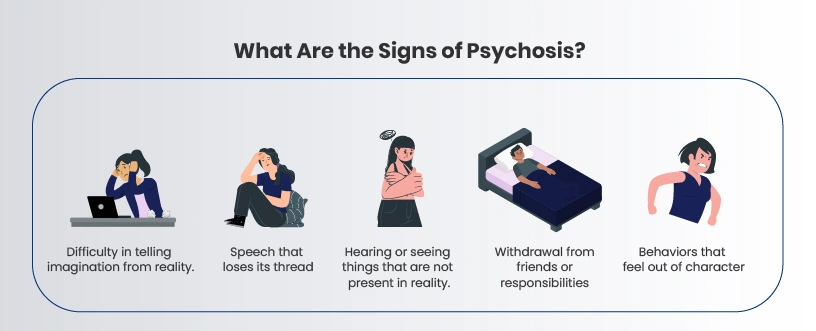
- Hearing or seeing things that aren’t present in reality
- Fixed beliefs that someone is monitoring or targeting them
- Speech that loses its thread
- Difficulty telling imagination from reality
- Growing distrust of the people around them
- Withdrawal from friends or responsibilities
- Responding to voices that others don’t perceive
- Behaviors that feel out of character
Symptoms of Schizophrenia
This condition rarely appears suddenly. Most people go through a gradual build-up phase. This is sometimes called the prodromal period, where changes are easy to mistake for stress or a rough patch. The early signs during this stage often include difficulty concentrating or disturbed sleep patterns. However, the major symptoms fall under the following three categories:
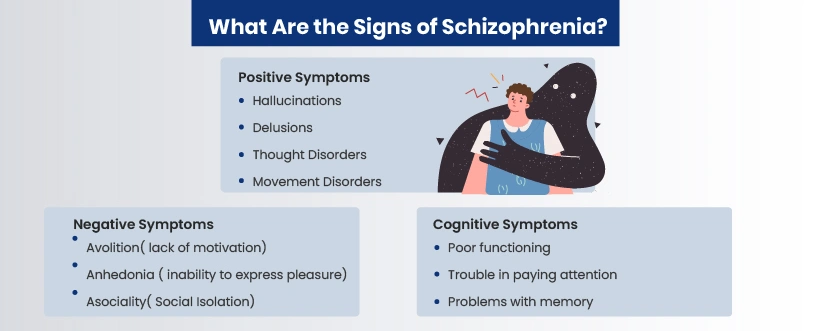
- Hallucinations
- Delusions
- Thought disorders
- Movement disorders
- Avolition (lack of motivation)
- Anhedonia (inability to feel pleasure)
- Asociality (social isolation)
- Trouble with memory, focus, and daily functioning
According to the National Institute of Mental Health, catching these changes early leads to better long-term recovery. That’s reason enough to reach out to a licensed psychiatrist for help.
What Causes Psychosis vs. Schizophrenia?
Both conditions don’t share the same causes. One is often triggered, and the other develops
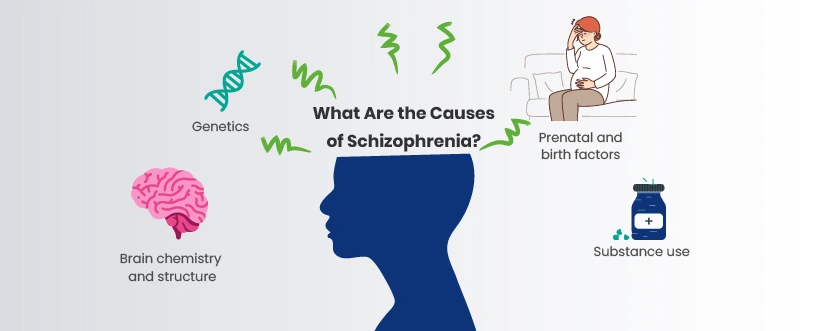
| What Triggers Psychosis | What Causes Schizophrenia |
| Underlying mental conditions, including schizophrenia, bipolar disorder, or severe depression | Genetics. Risk increases with a close relative who has the condition |
| Heavy substance use or withdrawal from certain substances | Brain chemistry and structure. Imbalances in dopamine and glutamate, plus differences in brain structure and nerve connectivity |
| Prolonged sleep deprivation | Prenatal and birth factors, such as pregnancy or birth complications, malnutrition, or exposure to infections or toxins |
| Neurological and medical conditions, including dementia, epilepsy, Parkinson’s disease, lupus, brain tumors, or multiple sclerosis | Substance use during adolescence and young adulthood |
| Postpartum psychosis, a rare but urgent complication appearing days or weeks after childbirth |
Can Schizophrenia Be Cured?
No, schizophrenia does not have a cure. According toMedlinePlus, Schizophrenia is a lifelong condition that needs ongoing treatment and support. So it can be controlled and show real improvements. People with steady treatment keep relationships and live an independent life. Psychotherapy keeps the symptoms manageable. The outcomes are consistently stronger when care starts early and continues without gaps.
How Are Psychosis and Schizophrenia Diagnosed?
Psychosis and schizophrenia are diagnosed through a clinical evaluation, since no single lab test or brain scan can confirm either one on its own. That evaluation typically includes:
- A detailed conversation covering symptoms, when they started, and how they’re affecting daily functioning.
- A review of personal and family psychiatric history.
- A physical exam to screen for medical causes.
- Bloodwork and sometimes a toxicology screen to rule out substance use or a treatable medical condition.
- Brain imaging in select cases, particularly with a sudden or unusual onset.
- Comparison against DSM-5 diagnostic criteria.
That last point is where the real dividing lines show up. The DSM-5 separates related conditions almost entirely by duration:
- Brief psychotic disorder: symptoms last under a month, then fully resolve.
- Schizophreniform disorder: symptoms last one to six months.
- Schizophrenia: symptoms and functional impairment persist for six months or longer.
How Are Psychosis and Schizophrenia Treated?
Treatment for psychosis and schizophrenia usually combines medication and therapy. They work together rather than one waiting on the other. Medication helps manage symptoms, while therapy helps someone understand what they’re experiencing, build coping skills, and stay connected to daily life. The therapies include the following:
Cognitive behavioral therapy (CBT) helps someone with disturbing thoughts and beliefs to respond to them differently. Used for psychosis, it’s sometimes called CBTp. It works by gently exploring unusual beliefs instead of dismissing them.
Dialectical behavior therapy (DBT) helps with managing intense emotions and staying grounded during hard moments.
Psychosis supportive therapy takes a different approach. It’s less about digging into the “why” and more about giving someone a steady, encouraging relationship with a therapist and support in staying connected to daily life.
How Do You Get Out of Psychosis?
The first step to getting out starts with a psychiatric evaluation. If you wait longer, the treatment tends to be harder. So, the following steps help you deal with this condition:
- Seek professional evaluation right away rather than waiting to see if symptoms pass on their own.
- Don’t stop any prescribed medication abruptly, even if it doesn’t feel like it’s working yet. Sudden discontinuation of medicines often makes symptoms worse.
- Address any substance use, since drugs and alcohol can extend or intensify psychotic symptoms.
- Loop in someone trusted: a family member, friend, or care provider who can help monitor symptoms and provide steady support.
- Protect sleep. Sleep loss both feeds into psychosis and worsens during it, so breaking that cycle matters.
- Stick with follow-up care, even after symptoms start easing. Many setbacks happen when treatment is dropped too soon.
A single psychotic episode can resolve completely, particularly once its underlying cause is identified and treated. Recovery from schizophrenia looks a bit different. It is less about symptoms vanishing and more about building a stable life alongside continued treatment.
Where the Two Conditions Overlap?
Psychosis shows up in more than schizophrenia alone. Here’s how it relates to bipolar disorder and depression.
Is Bipolar Psychosis the Same as Schizophrenia?
No, bipolar psychosis and schizophrenia are different conditions. In bipolar disorder, psychosis only shows up during severe mood episodes, either an extreme high (mania) or an extreme low (depression), not during milder mood swings. According to the National Institute of Mental Health, these psychotic symptoms usually match whatever mood the person is in. So during a manic high, someone might believe they’re famous or have special powers. During a depressive low, they might believe they’re ruined or seriously ill.
Is Depression With Psychosis the Same as Schizophrenia?
No, depression with psychosis and schizophrenia are separate conditions, even though both can involve delusions. Clinicians call the depressive version psychotic depression. Astudy published on PubMed found that it comes with a higher rate of suicide risk and hospitalization than depression without psychosis. That’s why catching it early matters so much. If you or someone you know is having thoughts of suicide.
In psychotic depression, the delusions are usually “mood-congruent,” meaning they match how someone is already feeling. A person might become convinced they’ve done something unforgivable or that they deserve to suffer. Unlike schizophrenia, this psychosis shows up only during depressive episodes and lifts once the episode ends.
Find Care in Riverside or Colton, California
At Inland Empire Behavioral Group, our team of psychiatric providers works with people managing psychosis, schizophrenia, bipolar disorder, and depression every day, building personalized treatment plans around each person’s actual needs.
We offer in-person appointments in Riverside and Colton, California, along with telehealth for anyone who needs more flexibility. If you’re ready to talk to someone,reach out and book an appointment. Our team is here to help.