Key Takeaways
Codependency in a relationship happens when two people become so dependent on each other that one or both struggle to manage life on their own. One person may always need help, while the other takes control and tries to solve every problem.
In a healthy relationship, both people support each other but still have their own lives. They can make decisions, share responsibilities, and grow together. Codependency goes beyond this and can harm both people and their relationship.
It can happen between couples, family members, or friends. One person may always try to help and care for the other, while the other relies on them too much. With time, this can affect their feelings and damage their relationship.
This blog will help you understand how codependency can go beyond healthy boundaries, negatively affect both people involved, and how to recover from it.
How Does Codependency Occur?
In a healthy relationship, it is very normal to help each other, but it becomes unhealthy when one person always puts in effort for others and ignores their own needs. Respect, trust, and support are the basics for a healthy relationship. Both people can share their feelings, make their own choices, and have their own lives.
A person in this state may care so much about others that they forget about themselves. They may hide their feelings, give up their dreams, or accept bad treatment because they fear losing someone.
For example, they may pay their partner’s debts or make excuses for their mistakes. They may think they are helping, but this can make it harder for their partner to take responsibility. Codependency is not a psychological illness, but it describes unhealthy relationship habits. These unhealthy habits can include not setting boundaries, having low self-esteem, and always putting others first.
“Daring to set boundaries is about having the courage to love ourselves, even when we risk disappointing others.” —Brené Brown
How Common Is Codependency?
There is no clear way to define or diagnose this condition. As per studies, 10%–20% of people may experience codependency, as in some patient groups, the rate was as high as 36% .
Codependency may be linked to anxiety, depression, low self-esteem, and relationship problems. It may also affect a person’s happiness. However, researchers still disagree about whether it is a separate mental health problem or an unhealthy relationship pattern.
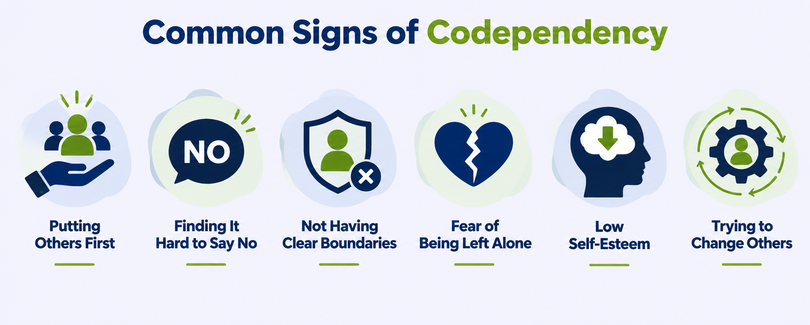
What are the Common Signs of Codependency?
The signs of codependency can be different for each person. However, some common signs may indicate an unhealthy relationship.
-
- Prioritizing Others First: You care about others so much that you forget about your own needs and goals.
- Finding It Hard to Say No: You agree to things even when you feel tired or uncomfortable. You may worry about upsetting the other person.
- Not Having Clear Boundaries: One may feel responsible for another person’s feelings, choices, or problems.
- Fear of Being Left Alone: You accept bad behavior because you are afraid the other person may leave you.
- Low Self-Esteem: A person may need someone else’s approval to feel loved or good about themselves.
- Trying to Change Others: You keep trying to fix someone’s problems. You may give advice or make sacrifices to change their behavior.
- Feeling Guilty About Your Needs: An individual may feel selfish when they spend time alone, enjoy their hobbies, or put themselves first.
- Accepting Bad Treatment: You make excuses for someone who lies, treats you badly, has an addiction, or abuses you.
- Hiding Your Feelings: A person may keep their feelings to themselves or avoid arguments because they do not want to upset the other person.
Having these signs does not always mean you are codependent. The main concern is when these habits keep hurting your well-being or relationships.
What Causes Codependency?
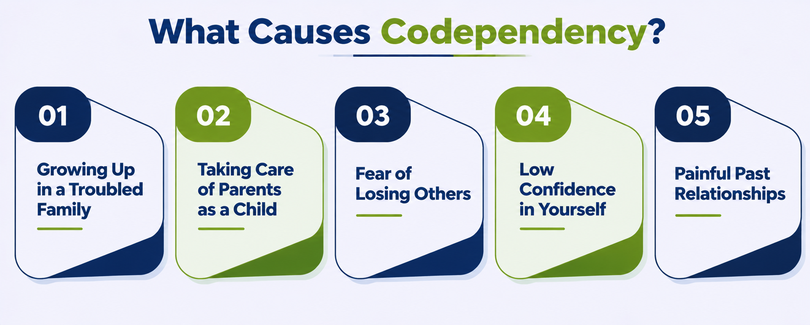
Codependency can develop for many reasons. Childhood experiences, insecure/anxious attachment style, dysfunctional family, and toxic relationships may play a role. Some common causes are explained below.
-
Growing Up in a Troubled Family
Children who grow up around addiction, fights, neglect, or abuse may put others first to keep peace at home. They may continue this habit as adults.
-
Taking Care of Parents as a Child
Some children have to take on adult responsibilities at an early age. They may care for a parent’s feelings or handle family problems. As adults, they may feel responsible for everyone and find it hard to ask for help.
-
Fear of Losing Others
Early experiences with parents or caregivers can affect adult relationships. Some people may fear rejection, struggle to trust others, or need constant reassurance.
-
Insecure or Anxious Attachment Style
Early relationships with parents and caregivers influence our overall future life. As when a child has a bad experience in childhood, they may become uncertain about whether their needs will be met in the future. An anxious attachment style can involve fear of abandonment, a strong need for reassurance, and sensitivity to signs of rejection.
-
Low Confidence in Yourself
People with low self-esteem may depend on others for approval. They may think that helping others or giving up their own needs will make them feel loved.
-
Toxic or Controlling Relationships
Relationships involving manipulation, emotional abuse, or repeated betrayal can affect trust and confidence. An individual may begin hiding their feelings, avoiding conflict, or taking excessive responsibility for keeping the relationship stable.
-
Past Relationships
Past experiences with control, abandonment, or emotional abuse can make it hard to set boundaries. Some people may stay in unhealthy relationships because they fear change or being alone.
These experiences do not mean a person will develop codependency. Anyone can develop unhealthy relationship habits, regardless of their background.
What’s the Difference: Love Vs. Codependency?
Love means caring for and respecting each other. But when you always put someone else first and forget about yourself, it can be unhealthy. In a love relationship, both people care for each other. They can say no, share their feelings, and make their own choices.
In a codependent relationship, one person may do anything to keep the other person happy. They may give up their own dreams, hide the other person’s mistakes, or stay in a bad relationship because they fear being alone.
For example, you can support a partner who is trying to overcome addiction. But hiding their actions or lying for them can make things worse. Also, you can love someone without forgetting about yourself. A healthy relationship should not make you give up your needs, happiness, or safety.
How Does Codependency Affect a Marriage?
Codependency in marriage can happen when one partner takes too much responsibility for the other’s feelings and problems. One partner may handle all the housework, pay the bills, or make excuses for the other’s behavior. They may ignore their own needs in the process. The other partner may start depending on them for everything.
Over time, this can lead to arguments, frustration, and emotional distance. Even if both partners love each other, they may feel unhappy. Couples can work on these problems by talking openly, sharing responsibilities, and respecting each other’s boundaries. Couples therapy may also help them build a healthier relationship.
How Does Codependency Impact Mental Health?
Codependency can affect a person’s feelings, confidence, and daily life and lead to several mental health disorders, which include:
- Anxiety and Worry: Aperson may worry too much about another person’s feelings or choices. You may also feel anxious when you cannot help them or talk to them.
- Worthlessness: An individual may feel that their value depends on how much others need them. When problems arise in a relationship, they may feel sad, helpless, or worthless.
- Feeling Tired and Drained: Always dealing with someone else’s problems can leave you feeling tired and upset. You may have little time for friends, hobbies, or personal goals.
- Losing Yourself: One may forget what they like, what they believe in, or what they want. This can happen when they spend most of their time trying to please someone else.
- Developing Unhealthy Habits: Some people may turn to alcohol or other substances to cope with their feelings. Others may hide their emotions instead of dealing with them.
These effects do not happen to everyone. Mental health problems can also make unhealthy relationship patterns harder to manage.
Treatment Approaches for Codependency
There is no specific treatment for codependency. However, therapy and support groups can help people build healthier relationships and take better care of themselves.
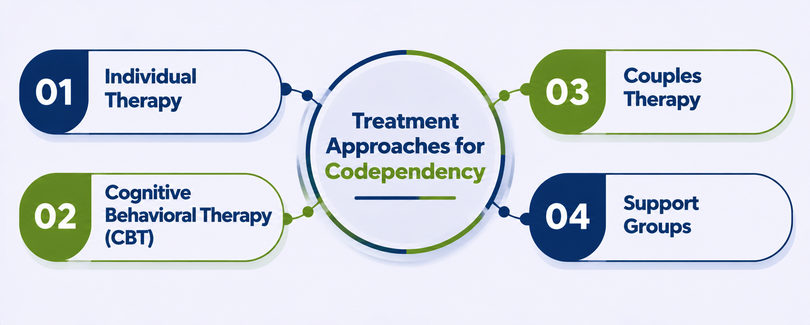
1.Individual Therapy
A therapist can help you understand your relationship habits. You can also explore how childhood experiences, low self-esteem, or fear of being left alone affect your relationships.
2.Cognitive Behavioral Therapy (CBT)
CBT helps you understand and change negative thoughts. For example, you may believe that you must solve everyone’s problems to be loved. CBT can help you change this belief and deal with guilt, worry, and arguments.
3.Couples Therapy
Couples therapy can help partners talk openly and understand each other better. They can learn to share responsibilities and respect each other’s boundaries. This may help when both partners feel safe and want to work on the relationship.
4.Support Groups
Groups such as Co-Dependents Anonymous (CoDA) offer support from people with similar experiences. These groups can help you learn healthier ways to manage relationships.
How Can the Inland Empire Behavioral Group Help?
Do you often put someone else’s needs before your own? Recognizing these patterns can be the first step toward improving your emotional well-being. At Inland Empire Behavioral Group, we have a certified team of mental health professionals who diagnose the root cause and then recommend treatments as per the unique needs of the individuals. You can get treatments at two different locations, Riverside and Colton, CA. We cover a wide range of insurance, so you don’t have to worry about the bills. You can also get virtual treatments through telepsychiatric appointments.
Schedule your consultation today!
- Prabhu, S., Pundir, P., V, B., & Gershuni, O. (2026). Prevalence and associated factors of codependency among wives of alcohol users. Manipal Academy of Higher Education. https://globalresearchspace.com/space?star=W7170072578#2.5/0.12/-0.12
- Martsolf, D. S., Hughes-Hammer, C., Estok, P., & Zeller, R. A. (1999). Codependency in male and female helping professionals. Archives of Psychiatric Nursing, 13(2), 97–103. https://doi.org/10.1016/s0883-9417(99)80026-0
- Hughes-Hammer, C., Martsolf, D. S., & Zeller, R. A. (1998). Depression and codependency in women. Archives of Psychiatric Nursing, 12(6), 326–334. https://doi.org/10.1016/s0883-9417(98)80046-0
- Prabhu, S., Velayudhan, B., Pundir, P., & Gershuni, O. (2026). Prevalence and associated factors of codependency among wives of alcohol users. Public Health Challenges, 5(3), e70231. https://doi.org/10.1002/puh2.70231