
Millions of people around the world suffer from mental health disorders, some of which are more severe than others. Severe and persistent mental disorders (SPMI) are among the leading causes of disability.
SPMI are complex, long-term mental health disorders that typically last for more than two years and severely disturb the overall quality of life.
These are a group of severe mental health illnesses that include schizophrenia, bipolar disorder, schizoaffective disorder, autism, obsessive-compulsive disorder, major depressive disorder, and more.
Understanding SPMI can help in early diagnosis and provide better treatment outcomes.
What is SPMI?
Severe and persistent mental illness (SPMI) is a group of chronic mental health conditions that impacts every part of life. It can be described as mental, behavioral, or emotional disorders that restrict relationships, self-care and lead to erratic and unusual behaviors. Unlike other disorders, it requires ongoing support.
Challenges of SPMI
Severe and persistent mental illness leads to severe challenges. Some of the common challenges include:
-
- Executive Dysfunction: trouble planning, organizing, and completing tasks, which can severely impact the relationships with family and lead to career difficulties.
- Social Isolation: SPMI is considered to be a social stigma, which makes one avoid social gatherings and stay isolated.
- Physical health issues: People in this state also experience physical health issues such as cardiovascular disease and high blood pressure. It happens because of lifestyle factors and medication side effects.
- Anosognosia: A clinical situation where an individual is clueless about their health condition, which acts as a barrier to getting proper treatment.
How Common is SPMI?
As per the research by the National Library of Medicine, SPMI affects 2.8% of people in the US. It means around 1 in 20 adults in the USA experienced a serious mental illness. The highest rates of SPMI occur at the age of 18 to 25.
Moreover, approximately 23 million people, or 1 in 345 people (0.29%) worldwide, also struggle with conditions like schizophrenia or schizoeffective disorders, which are severe mental illnesses. It is reported that only half of the people in millions received some kind of mental health treatment. That means one in every 3 people with serious mental illness didn’t get any treatment at all.
Mental Disorders That Are Severe and Persistent Mental Illnesses (SPMI)
A mental health condition that becomes so serious that it causes extreme disruption in relationships, work, and daily functioning, and which cannot be resolved by regular psychiatric care, is considered to be SPMI.
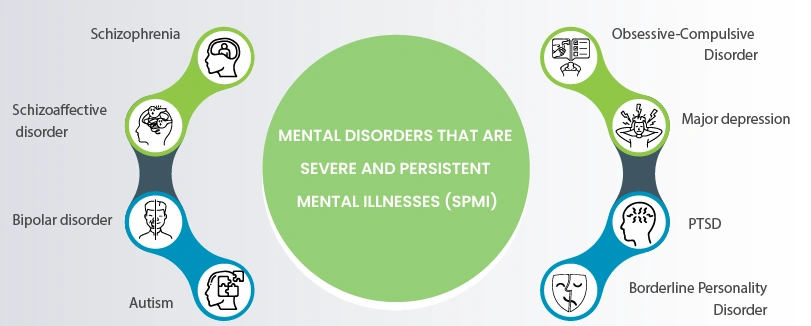
Here are different types of mental health conditions that fall under the umbrella of SPMI:
1. Schizophrenia
It’s a serious and persistent mental health disorder that causes hallucinations and delusions. It makes one question their self-belief as they see and hear things that others can’t. Individuals in this particular state also have issues with memory loss and learning ability. It typically occurs in adulthood and causes one to stay isolated.
2. Schizoaffective disorder
A chronic condition that is the combination of schizophrenia (hallucinations) and a mood disorder (depression or mania). Schizoaffective disorder occurs differently in each affected person and leads to issues in academics, job, and social settings if it is not treated. It makes one stay alone and avoid social gatherings.
3. Bipolar disorder
A complex mental health condition that leads to extreme shifts in mood, energy, and functioning. that alternate between depressive and manic episodes. It causes significant functional impairment that can strain relationships with friends and family members. However, individuals can get better after getting treatments.
4. Autism
Autism spectrum disorder is a complex lifelong disorder that impacts the ability to communicate with others. It leads to significant challenges, including limited speech, intense behavioral issues, and high dependence on caregivers.
5. Obsessive-Compulsive Disorder
Obsessive-compulsive disorder (OCD) is a debilitating condition. Individuals in this particular state remain in time-consuming activities and engage in compulsive behaviors in an attempt to reduce anxiety. It severely impacts functioning at work or school, restricts social interactions, and can lead to severe self-neglect, physical injury, and high suicide risk.
6. Major depression
Depression can be counted in SPMI when it leads to persistent feelings of despair and lasts for a long period of time. It brings hopelessness, extreme fatigue, sleep disruptions, loss of interest in life, and suicidal thoughts.
7. Post-traumatic stress disorder (PTSD)
A debilitating condition that occurs after experiencing a traumatic incident. It leads to chronic, disruptive symptoms, such as flashbacks, nightmares, avoidance behavior, and anxiety, which last for a longer period of time. It severely impairs daily life, relationships, and functioning.
8. Borderline Personality Disorder
Individuals in this particular condition can experience strong mood swings, act without thinking about the consequences, and feel unsure about who they are. BPD leads to poor self-image, intense emotional instability, impulsivity, and tumultuous relationships.
Symptoms of SPMI
SPMI comes with a lot of challenges. Some of the symptoms of severe mental illness include:
- Extreme disorganized thoughts
- Mental chaos
- Detached from reality
- Severe mood swings
- Nightmares
- Delusional beliefs
- Disorganized speech or writing
- Socially unacceptable behavior
- Decline in work performance
- Unusual preoccupations and fears centered on a person or situation
- Irrational behaviors
- Loss of interest in maintaining hygiene
These symptoms can lead to significant impairments in social, occupational, and personal functioning and require comprehensive treatment.
What are the causes of SPMI?
The exact cause of SPMI is not fully understood, but there are some factors that may contribute to the development of the condition.
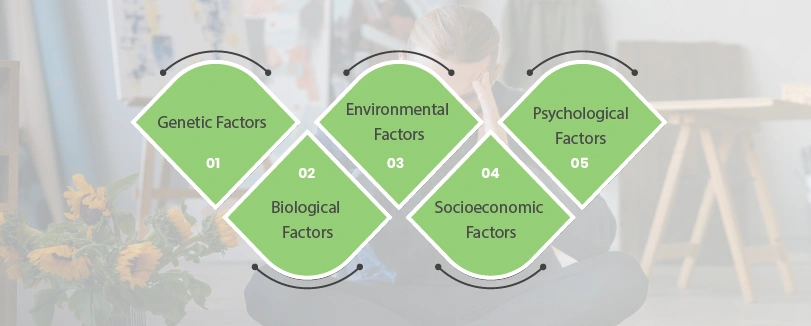
It is usually influenced by genetics, life experiences, and social factors that all work together to cause mental disorders.
1. Genetic Factors
Mental health conditions run in families, so having a family member with a mental illness can make one more vulnerable to developing SPMI. Additional genes have been identified that lead to a genetic risk, but this does not guarantee that someone will develop SPMI.
2. Biological Factors
Biological factors that may include infection, brain defects or injury, prenatal problems, substance abuse, not getting enough nutrition, or exposure to toxins can increase the risk of developing SPMI. Moreover, changes in brain functioning and structure, or hormone levels, can also increase the onset of SPMI over time.
3. Environmental Factors
Environmental factors such as a tragic family incident, death or divorce, excessive use of substances by the individual’s parents, and social or cultural expectations can also increase the risk of developing severe mental health illnesses.
4. Socioeconomic Factors
People who are struggling with unemployment, low income, deprivation, debt, and unstable living conditions are also at high risk of developing these conditions.
5. Psychological Factors
Constant stress, lack of social support, and loneliness can cause symptoms to start or get worse. All these symptoms increase the risk of developing severe mental illness, especially for people who are already at risk.
Note: Every individual has a different experience and different factors, and it is often a combination of factors that results in the development of SPMI. However, early intervention and social support help in managing the condition earlier.
The Impact of SPMI
Living with severe persistent mental illnesses leads to several challenges. It severely impacts work and concentration, which eventually leads to unemployment or poor academic results. Individuals tend to remain alone and don’t communicate their feelings, which strains their relationships with family and friends. Also, sometimes the symptoms are misunderstood as character flaws or intentional behavior, which can deepen depression, anxiety, and self‑stigma
Moreover, in order to cope with difficult feelings, individuals also tend to rely on substances which eventually makes the condition worse.
However, SPMI can only get better with consistent support and treatments. If it is not treated, it can increase the risk of self-harm and suicide.
How is SPMI Diagnosed?
SPMI can be diagnosed by a mental health professional by following DSM 5 criteria. They check the medical history, family history, and look for the symptoms. They also check the active, moderate to severe symptoms, for example, psychosis, extreme mood instability, and suicidal behavior that significantly disrupt daily life.
Mental health professionals also conduct some interviews with the person who is suffering and also with the caregivers and family members, and they recommend treatments that suit them best.
Treatment Approaches
Managing SPMI often requires a combination of treatments. A mental health professional combines medications with therapeutic approaches to get better outcomes.
Medications
Medications are one of the main aspects in the treatment of SPMI. as they help manage symptoms and prevent reversion. Common medications include:
- Antipsychotics: It is very helpful for treating schizophrenia and bipolar disorder.
- Mood Stabilizers: It is very effective for bipolar disorder as it stabilizes the mood
- Antidepressants: it helps in treating major depressive disorder.
Moreover, meeting mental health professionals regularly is essential, as they can help ensure medication effectiveness and adjust dosages as needed.
Evidence-based Therapeutic Approaches
A mental health professional recommends therapies in order to alleviate the symptoms, which is an essential part of treating SPMI.
Some of the common therapies that can be helpful include:
Cognitive Behavioral Therapy (CBT) is one of the most effective treatment methods to treat SPMI as it focuses on changing negative thought patterns and behaviors. CBT intervenes in the thoughts and changes them in positive ways. Dialectical Behavior Therapy (DBT), it is also a type of CBT that helps people manage emotions and improve relationships.
Moreover, mental health professionals also recommend Family Therapy as it involves family members in the treatment process to improve communication and support. Furthermore, Trauma-focused care, which is designed to help if an individual has gone through stressful or traumatic experiences.
Get Expert Care at Inland Empire Behavioral Group
Severe and Persistent Mental Illness causes extreme challenges, but understanding these conditions and accessing appropriate treatments can lead to improved results.
If you or any of your loved ones are experiencing the symptoms of SPMI or any other mental health conditions, help is within reach. At Inland Empire Behavioral Group, we have a team of certified professionals who offer personalised and compassionate treatments. Whether you are navigating with OCD, depression, anxiety, an eating disorder, or psychosis, we are here to help. We provide a safe and non-judgmental place where you can talk about your issues without the fear of judgment.
Don’t wait to get help!
Book your consultation today