
Have you ever noticed a sudden change in someone that makes you think like you are watching a stranger? Or perhaps you had a friend who, over the course of a week, had the life of the party and then was completely silent, refusing to answer calls?
This is what we call erratic behavior!
We all experience the days when we feel a bit “off,” but erratic behavior is something different. However, erratic behavior is when someone’s behavior suddenly becomes unpredictable and inappropriate.
It is characterized by sudden mood changes, impulsive decisions, or a lack of consistency. Erratic behavior severely impacts everyday life activities, relationships, and work.
When someone acts erratically, it can be unsettling for the person experiencing it and for those around them.
Understanding this behavior helps in early diagnosis and provides effective treatment.
What is Erratic Behavior?
The term “erratic” comes from the Latin word erraticus, meaning “wandering“. It causes a jarring shift in behavior that leaves others feeling confused or alienated.
Erratic behavior makes one different from their usual behavior. It is because of sudden, uncertain, discrepancy actions or emotional reactions. It causes extreme shifts in mood and attention, which may seem irrational to others. People in this state usually stay calm and may suddenly lash out without any clear reason.
It usually occurs because of extreme stress, lifestyle changes, excessive substance abuse, or mental health disorders such as bipolar disorder, ADHD, PTSD, or anxiety disorders.
What does Erratic Behavior Look Like?
Erratic conduct lacks consistent, predictable, and stable patterns. It is not just doing something that just happens once; it is a pattern of inconsistency.
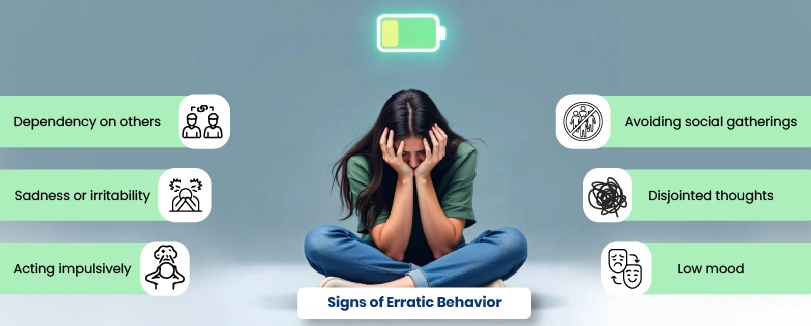
Here are some of the common signs:
- Rapid shifts from high elation to intense sadness or irritability.
- Irritability and frequent disproportionate outbursts.
- Making decisions and acting impulsively without thinking about the consequences, such as risky, reckless driving, substance abuse, and more.
- Avoiding social gatherings, communication, friends, or retreating from daily responsibilities.
- A sudden decline in work, school, or personal daily responsibilities.
- Dependency on others
- Low mood, or lack of energy
- Apathy toward self-care
- Disjointed thoughts
- Psychological disruptions, such as hallucinations and delusions
- Physical symptoms like pacing, wringing hands, fidgeting, or talking speedily.
- Trouble following schedules or commitments.
What are the Causes of Erratic Behavior?
The exact cause of this condition is often difficult to determine. However, several factors may contribute to its development, which may involve a combination of environmental, biological factors, mental health conditions, substance abuse, or medical issues that can lead to unpredictable actions.
1. Mental Health Conditions
People diagnosed with mental health conditions like bipolar disorder, depression, anxiety, Personality disorder, and trauma are at high risk of experiencing erratic behavior. As bipolar disorder causes extreme shifts in mood, depression leads to sadness and lack of concentration, and Borderline Personality Disorder leads to intense, unstable emotions. Also, schizophrenia can cause unpredictable actions, such as hallucination, and anxiety disorder causes chronic worry, panic attacks that lead to avoidant behavior.

Moreover, ADHD causes impulsive, erratic behaviors and traumatic experiences, which lead to the fight or flight response.
2. Biological Factors
Several biological factors increase the risk of erratic behavior, including neurochemical imbalances, structural brain changes, genetics, and hormonal fluctuations. These factors disrupt impulse control, emotional regulation, and cognitive processing. The changes in brain functions in the amygdala and the prefrontal cortex can lead to reduced impulse control, which eventually leads to aggression or sudden outbursts.
Moreover, it’s an inherited condition that runs in families and leads to irrational behavior. Also, maternal smoking, drug/alcohol abuse during pregnancy, and prenatal damage can increase the risk of later behavioral disorders.
3. Environmental Factors
Environmental factors such as chronic stress, abuse in childhood, exposure to toxins, or excessive intake of substances can lead to irrational behavior. The excessive intake of substances such as alcohol and cocaine can severely impact the mood and lead to several mental health conditions and changes in behavior.
Moreover, a lack of physical or emotional fulfillment often serves as a catalyst for erratic behavior.
4. Neurological or Medical Conditions
People who have head injuries, thyroid issues, or hormonal imbalances may exhibit irregular behaviors. The hormones act as the chemical messengers in the body, influencing neurotransmitters like serotonin and dopamine, which regulate mood. If there is a disturbance in hormones, it might lead to irritated behavior.
Moreover, the thyroid glands also impact the mood, which may also contribute to irregular behaviors.
Lack of Sleep & Poor Nutrition
These physiological factors can significantly impact mood stability and cognitive control. Lack of sleep increases cravings for unhealthy, calorie-dense foods, leading to mood swings, irritability, lethargy, and poor impulse control, which often results in erratic and emotionally volatile behavior.
How Does Erratic Behavior Impact Life?
Erratic behavior severely damages relationships and impacts everyday life activities. Living with this condition can be draining and lead to several issues. Over time, these actions can also lead to social isolation and increased anxiety.
Erratic Behavior in Relationships
People experiencing this condition have fast intimacy because of the impulsive nature, make big plans, but then suddenly take distance from their partners. They don’t maintain any boundaries and overly share everything. However, all these aspects severely impact the relationships internally. Here is how it impacts the relationships:
- Communication Breakdowns
- Digital manipulation, such as asking for passwords
- Reactive conflicts
- Apologies and plans for change are made but not implemented.
- Controlling and isolating the other person
Erratic Behavior at Work
Irrational behavior at work, such as mood swings, missed deadlines, or uncharacteristic outbursts, often occurs because of stress, mental health conditions, or substance abuse.

Here is how it impacts the work performance:
- Unpredictability raises risk and erodes credibility.
- Performance Issues, such as missed deadlines, absenteeism, and inability to focus.
- Inconsistent responses to the important things
- Staying irritated, such as mood swings, crying, or social withdrawal.
- Talking excessively or arguing increasingly with others
- Poor interpersonal skills.
All these factors severely impact the work and lead to serious issues.
When to Seek Help
Occasional mood swings or bursting out happen sometimes. But if these symptoms are occurring without any clear reason, you may feel like it’s getting intense and you’re unable to control it, get help from a mental health professional. In the worst cases, it can also lead to violence, self-harm, severe substance abuse, psychosis, or threats to safety, which is why early intervention is important.
How to Cope with Erratic Behavior?
It’s highly treatable with the right combination of medication and psychotherapy. A mental health professional diagnoses the exact condition by using the Diagnostic and Statistical Manual of Mental Disorders (DSM-5) criteria. They recommend treatment as per the severity of the condition.
The Role of Professional Treatments
Cognitive behavioral therapy helps in changing the thoughts that lead to this behavior. It helps in managing intense emotions and modifying destructive actions through structured sessions. CBT helps individuals recognize behavior patterns and triggers, enabling them to replace impulsive, angry, or unstable actions with more stable responses.
Moreover, Dialectical behavioral therapy is also considered to be the best therapy for managing this condition. This structure therapy helps in managing intense emotional swings and impulsivity. It teaches skills in distress tolerance, emotion regulation, and interpersonal skills to replace destructive actions with stable responses.
A mental health expert also recommends some medications that can help in treating this condition in a better way, such as antidepressants, antianxiety, mood stabilizers, and antipsychotics.
Lifestyle changes
Managing these irational behavior involves establishing consistent daily routines along with professional treatment. These include:
- Setting boundaries
- Performing mindfulness activities
- Taking 7 to 9 hour sleep
- Eating a healthy, nutritious diet
- Maintain social connections
- Deep beating techniques
- Avoid substance intake
- Seek professional support
How can the Inland Empire Behavioral Group Help?
“The best way out is always through.” — Robert Frost.
At Inland Empire Behavioral Group, you’ll find a safe, confidential space where you can talk openly about your experiences, without fear of judgment. We offer full-spectrum mental health services for children and adults, including inpatient mental health treatment as well as telepsychiatry.
If you are ready to take the next step, we invite you to reach out or share your story with us. Your experience matters, and we are here to support you every step of the way.
Treatment Options at Inland Empire Behavioral Group include:
- Individual therapy: You can get one-on-one sessions where a person works with a mental health expert to explore emotions, behaviors, and challenges.
- Group Therapy: It’s a helpful technique for people who feel lonely and isolated. It provides a connection by sharing your experiences in a group, which can help you feel less alone. Hearing your story from someone else can give you new insight and help you stay consistent with the treatment.
- Psychiatric medication management: it reduces the side effects and provides effective management of mental health issues.
- Family Counseling: if needed, we meet with families to support everyone in learning healthier, more balanced ways to relate to each other.
- Telehealth Services: You can meet with us through a virtual session and get support from home. Our secure telehealth platform keeps your privacy safe.