
Do you feel completely off sometimes, as you’re more tired and emotional than usual? And you are not sure why this is happening?
This happens because of the hormonal shifts!
Hormonal shifts are a natural part of life for women, but it severely affects mood and cognitive functioning. They act like chemical messengers that impact serotonin and dopamine, which are responsible for mood, energy, and cognitive functioning.
Females go through different life stages, such as puberty, pregnancy, and menopause, during which hormone levels shift in unusual ways. These hormonal shifts play a significant role in the development of mental health disorders, such as depression and anxiety.
However, the changes in hormones are hard to manage and can impact relationships, work, and other important tasks.
Understanding the connection between female hormones and mental health is crucial to getting treatments earlier. Also, it helps navigate life stages with clarity and compassion.
What Do Hormones Actually Do?
Hormones travel in the bloodstream to tissues or organs. They work slowly, over time, and affect physiological processes in life, such as mood, reproduction, metabolism, and cognitive functioning. Only a small amount of changes in hormones can cause big changes in cells or the whole body. It also leads to noticeable emotional challenges, which is how most of the females come to know that these are hormonal changes.
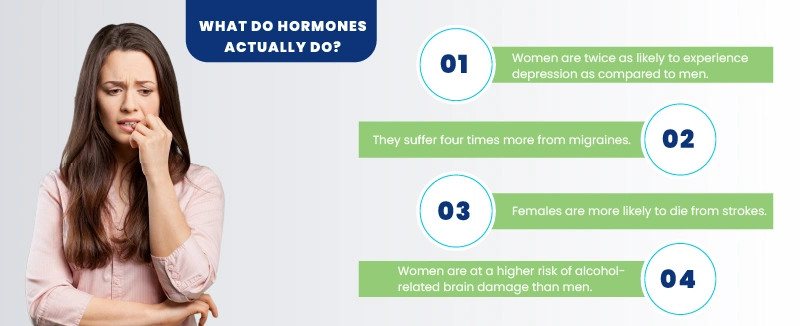
However, understanding this link can help individuals know that the changes in their mood are happening because of hormones. Also, talking about it reduces the stigma, as long-term hormones can lead women to long-term mental health issues. As per the National Institute of Medicine, these hormones impact women’s lives, including mental health.
- Women are twice as likely to experience depression as compared to men.
- They suffer four times more from migraines.
- Females are more likely to die from strokes.
- Women are at a higher risk of alcohol-related brain damage than men.
The hormonal changes in women influence different parts of life. On the other hand, men’s testosterone levels (a steroid hormone that stimulates the development of males) fluctuate, but they tend to remain more stable compared to women.
Hormones in Women: How Does It Affect the Brain?
Psychological disorders caused by these fluctuations are usually chronic and may result in decreased quality of life and functional disabilities.
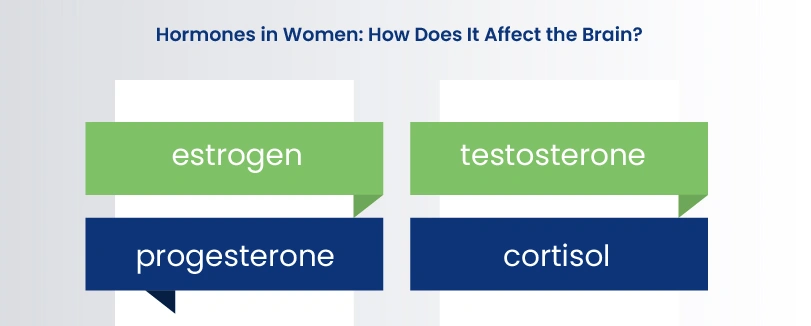
Understanding the hormonal dynamics is important for addressing the intricate interplay between hormones and women’s mental health.
Estrogen
It is known as estradiol, plays a major role in women’s mental health. It affects the neurotransmitters such as dopamine and serotonin, which are mood-related chemicals. The changes in estrogen automatically affect the mental health, mood, memory, energy, emotions, and also impact social connections. This is the happy hormone that gives pleasure and overall satisfaction. However, the shifts in estrogen levels severely damage the brain and lead to several mental health challenges.
- When it’s high: Most women feel more social, energetic, and resilient.
- When it drops: Low levels can lead to irritability, anxiety, and brain fog.
Progesterone
It brings a sense of peace and calmness to women’s mental health. It fosters a state of happiness and reflection, while also combating inflammation within the body. However, for some people, it may increase irritability or sorrow, especially during the premenstrual phase.
Testosterone
Although it’s a male hormone, it is also present in women. It influences a woman’s mood, muscle tone, focus, and libido. The imbalance of this hormone can lead to several mental health challenges and influence motivation, energy, and focus.
Cortisol
Cortisol is responsible for stress. It interferes with reproductive hormones and affects emotional regulation. The imbalances of cortisol can severely affect the mental health of women as they are unable to control stress and burst out with anger. However, all these hormonal shifts are not always biological, as social and cultural factors play an important role as well. A woman experiencing workplace stress, caregiving responsibilities, or other challenges may find hormonal shifts even more difficult to manage.
For instance, lower estrogen levels are often linked with reduced serotonin activity, which can increase vulnerability to depression. Similarly, fluctuations in progesterone can impact GABA receptors in the brain, influencing anxiety levels and emotional sensitivity.
This connection explains why many women report mood changes at specific times in their menstrual cycle or during major hormonal transitions like pregnancy or menopause.
The Symptoms of Hormonal Imbalances in Females
There is a strong connection between female hormones and mental health. Hormones play a crucial role and regulate many functions in the body. However, the imbalances of hormones can lead to significant challenges in life. It can lead to depression, anxiety, and mood disorders, which can impact the overall quality of life.
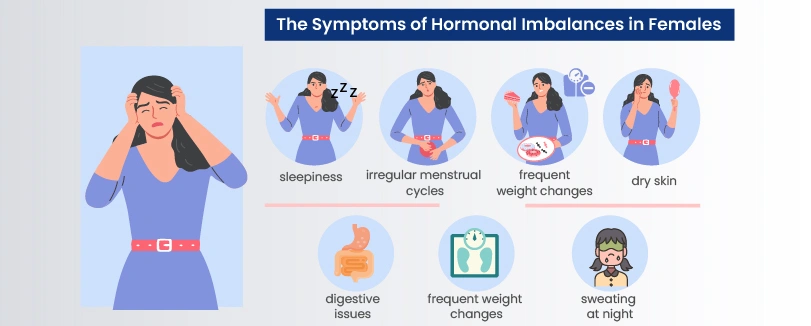
Also, if a person is already struggling with depressed or anxious thoughts, these feelings can get worse due to hormonal changes.
Here are some of the common symptoms of hormonal imbalances in females:
- Sleepiness or trouble sleeping
- Feeling weak or having frequent bodyaches
- Memory issues
- Unable to focus on important things
- Changes in the heart palpitations
- Digestive issues
- Excessive hair loss
- Dry skin
- Feeling the weather intensely means, such as feeling too cold
- Frequent weight changes
- Irregular menstrual cycles, which can affect fertility (ability to get pregnant).
- Hot flashes
- Sweating at night.
Hormonal Phases and Mental Health
A woman’s mental health can be influenced by hormonal changes across different life stages. It usually follows the stages of the menstrual cycle, which is about 28 days but can vary.
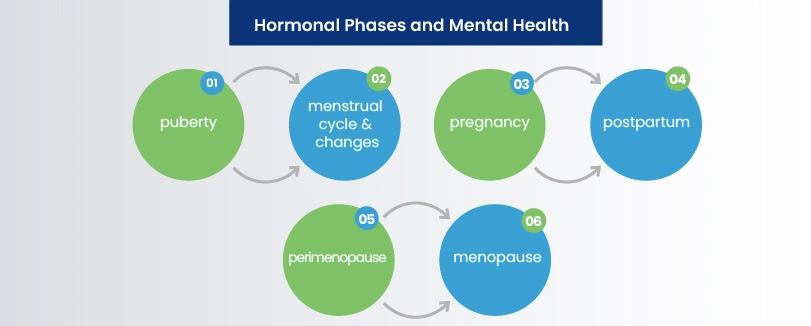
1. Puberty
Puberty is the first major hormonal shift. At this stage, progesterone and estrogen levels rise when girls start puberty, such as menstruation and body changes. These hormones can affect the mood, but they can be unpredictable at this age. All these physical changes come with emotional challenges. It is combined with brain development and outside stress, which can lead to mood swings, irritability, sudden episodes of sadness, and anxiety. This stage is also a time when one may feel pressure to fit in, and excessive stress of developing an identity.
However, knowing that these hormonal fluctuations and their challenges earlier is crucial. As it helps people to reduce the risk of long-term mental health challenges,
2. Menstrual Cycle & Changes
At this stage, hormonal changes bring intense changes and challenges. As the estrogen and progesterone are at their lowest. During the menstrual cycle, estrogen and progesterone rise and fall, which eventually changes mood, confidence, and energy. For some women, these shifts are very mild and barely noticeable. For others, it led to significant challenges.
Moreover, the menstrual cycle comes up with different stages, such as the follicular phase, in which the hormones prepare the body for ovulation. Also, women experience premenstrual syndrome (PMS) and premenstrual dysphoric disorder (PMDD). These conditions are directly linked to hormonal change and lead to irritability, sadness, fatigue, severe depression, or anxiety. Recognizing PMS and PMDD as conditions that are linked to hormonal health validates women’s experiences and helps them to get professional support.
3. Pregnancy
Pregnancy is one of the most beautiful and dramatic phases of life. But it also brings a lot of challenges. The hormonal fluctuations trigger several challenges, as the estrogen and progesterone levels surge to support the development of the baby. However, most of the women feel joy or calm during pregnancy, while some experience heightened anxiety, intrusive thoughts, or depressive symptoms. It brings a lot of emotional changes and leads to emotional instability.
4. Postpartum
After giving birth to the baby, estrogen and progesterone can affect mood in many women.
Most of the people experience the “baby blues, ” which occur for a short period. While some experience severe or longer-lasting symptoms tend to be diagnosed as postpartum depression. However, postpartum depression is a serious condition that cannot be managed on its own and requires professional treatment.
5. Perimenopause
At midlife, women experience perimenopause, the transitional phase before menopause. This is the time when periods stop and fertility ends. It brings a permanent decrease in estrogen and progesterone. The body compensates for this mechanism by producing progesterone from the ovaries as the estrogen level falls. It’s common for hormone levels to fluctuate during perimenopause, to go up and down like a rollercoaster.
6. Menopause
Menopause is a hormonal transition in the life of females that occurs as a result of decreasing estrogen levels. As females age, their estrogen production level from the ovaries decreases until menstruation finally stops, which is menopause. The decreased level of estrogen can cause uncomfortable side effects that can last more than ten years following the cessation of the cycle. Menopause can be painful or even intolerable for some women due to the profound impact of declining estrogen levels. However, the symptoms of low estrogen are typically easy to treat.
Hormones and Anxiety Disorders
Most of the people ask how a hormonal change can lead to anxiety disorders. However, the answer is that the fluctuations of hormones can contribute to worsening anxiety disorders. It is because estrogen leads and progesterone lead to low mood, which eventually increases the risk of developing anxiety and other related disorders. The changes in progesterone hormone affect the body’s stress response, which leads to the development of anxiety disorders in women.
As per the research by the National Institute of Medicine, women are more likely than men to experience anxiety disorders. And one of the main elements that increases the risk is hormones. Women are more at risk during the time period of postpartum or menopause.
Depression and Hormonal Changes
Women experience sadness, mood swings, and irritability because of the hormonal changes in the body. Depression in women is often linked to hormonal shifts; these conditions that highlight this connection include postpartum depression, perimenopausal depression, and menstrual-related mood disorders. Hormonal changes, like those in estrogen, play a big role. When estrogen levels decline, serotonin regulation is also affected, which contributes to increased crankiness and distress.
Similarly, lower progesterone levels can cause irritability, anxiety, or mood swings that will make it very difficult to handle things you normally do. In this way, these hormonal fluctuations can set off a depressive attack, particularly for those who’ve gone through major sadness in the past.
Hormonal Changes Across the Lifespan
Women experience hormonal shifts throughout their lives. They experience several mental health challenges because of hormonal changes. Each hormonal stage influences mental health differently, yet they share common threads. Low estrogen levels could increase their risk for depression. It directly affects serotonin in the brain, as serotonin helps control mood, hunger, and sleep. Estradiol, which is the active form of estrogen, boosts serotonin by making more and ceasing to function. This is why transitions in estradiol can influence our mood and emotional control. Hormonal changes do not mean women are destined for poor mental health. Instead of talking about it helps others to get treatments earlier.
However, we often know that most of the women, while experiencing any mental disorder symptoms, feel misunderstood, dismissed, or judged during these times. They don’t know all this is happening because of the internal changes, which are deeply rooted.
Understanding the stages of hormonal change creates space for women to foresee challenges and seek help early.
When to Seek Help
If you feel like the symptoms are overwhelming and cannot be managed on their own, get help from a mental health professional immediately. These hormonal challenges can lead to long-term mental health disorders and can strain relationships, impact work, and performance.
It can only be diagnosed by a mental health professional, they recommend treatments as per the severity of the condition. However, some women don’t seek help because they’re afraid of being judged.
Talk to a mental health professional if:
- Symptoms last more than two weeks
- PMS is very intense and may be PMDD (premenstrual dysphoric disorder)
- You have signs of postpartum depression
- You notice big mood changes during perimenopause
Diagnosis and Treatments
Female hormones affect emotions, behavior, and almost every part of life. It causes mood swings, anxiety, depression, and other mental health conditions. However, these conditions are curable with the right combination of medication and evidence-based psychotherapies. A mental health professional diagnoses the condition by looking at the history and symptoms and recommending treatments.
Psychotherapy
Psychotherapy is a talk therapy where a mental health professional and the patient sit together and talk about their issues. A psychiatrist listens to the concerns of the patients and recommends therapies along with medications. Some of the common therapies that help are as follows.
Cognitive Behavioral Therapy (CBT)
CBT is an evidence-based therapy that helps in changing thought patterns. It is helpful to treat anxiety, depression, and other mental health disorders. A type of talk therapy, this method follows a structured process with sessions personalized to a person’s conditions. CBT helps patients manage their anxious feelings by changing them into desirable thoughts. This therapeutic approach focuses on changing a person’s thinking and behavioral patterns.
Mindfulness-Based Cognitive Therapy (MBCT)
MBCT is specifically used during menopause to reduce anxiety, stress reactivity, and improve tolerance for physical symptoms like hot flashes.
Also, mental health professionals recommend medications these include, antidepressants, antianxiety, and antipsychotics. These medications help to treat the condition earlier.
Get professional Care at Inland Empire Behavioral Group
Understanding the connection between your hormones and mental health can be empowering. When you know what’s happening in your body, you’re better equipped to manage changes with confidence and compassion.
So if you’re looking for mental health care services near you, look no further, as Inland Empire Behavioral Group is here to help. Our highly expert team of certified professionals offers compassionate, evidence-based treatments. We conduct a thorough diagnostic assessment to get a clear picture and to know the root cause. You can also get one-to-one sessions and group therapy sessions. We cover a wide range of insurance and also offer a self-pay option for your ease. We also provide medication management to reduce the side effects if there are co-occurring mental disorder conditions.
Each treatment plan at Inland Empire Behavioral Group adapts to the individual’s needs. Psychiatrists monitor emotional progress, adjust therapy goals, and emphasize continual self-awareness and improvement.
Book your initial consultation today!