
You may have dealt with a dark empath if you ever felt taken advantage of by someone you shared an emotional connection with. They can read people’s emotions easily, but they use this ability to manipulate others rather than support a connection.
If you are in a relationship with someone who has these manipulative traits, such as dark empathy, it can ruin your professional and personal life. It is crucial to understand this dynamic if you want to protect your emotional well-being. You need to increase self-awareness to foster an authentic relationship. Moreover, it will give you confidence to set boundaries and end relationships with toxic people.
What is Dark Empath?
It is someone with a high level of empathy. But they use it only for personal gains, not to help others. They easily understand others’ emotions and pretend they care. But they ultimately want others to help them financially and socially.
Additionally, they don’t have compassionate empathy, even with high emotional intelligence, to understand others’ emotions. It does not mean that they are experienced in using you in ways that compel you to help them. In fact, they utilize cognitive empathy, which allows them to understand others’ thoughts and perspectives. After this understanding, they use it to manipulate you without feeling any remorse or consequences.
According to the Research, this empath type explained while exploring the dark traits of human behaviour. This research aims to investigate the existence of darkness in the presence of empathy. Moreover, they found that people with dark traits also have high levels of cognitive empathy.
What are other Types of Empath?
It is important to understand that the empath spectrum is broad and diverse. There are various types of empathy, and the following are the most common ones.
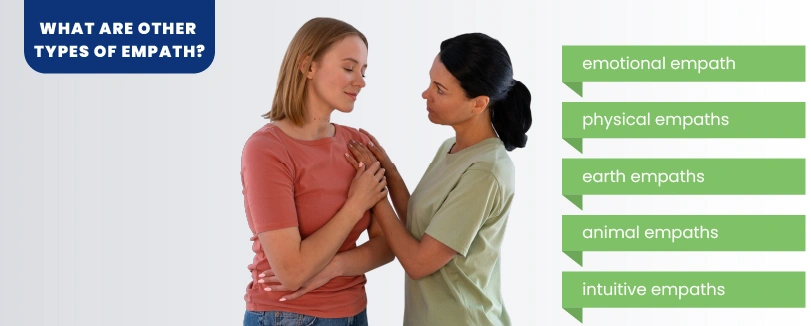
Emotional Empath
Emotional empaths can adjust to the feelings of those around them. They often experience and absorb others’ emotions as if they were their own. This empathic sensitivity makes them able to offer support and understanding to people in emotional distress. But it can leave them overwhelmed or drained by the intense emotions and energies they encounter.
Physical Empaths
Physical empaths are highly aware of the physical sensations and sickness of humans. They often experience others’ physical pain in their bodies. The positive side is that a physical empath might experience creative surges of energy in their system around them. In fact, they can sense discomfort and pain in others intuitively, which makes them natural healers.
Earth Empaths
Earth empaths are in deep connection with nature and aligned with the energies of the earth. They feel a high sense of peace when in a natural environment. Also, they feel a calling to protect and preserve the planet, and often find solace in nature. Moreover, they can also sense the seasons, vibrational change in Earth’s magnetic fields, and astrological conjunctions.
Animal Empaths
Animals empaths have a passion and experience an emotional and deep connection with animals. They often understand and communicate with animals on an intuitive level. These feelings of deep emotions towards animals form a strong connection with pets and wildlife.
Intuitive Empaths
Intuitive empaths have high intuitive abilities, often receive insights and guidance through their gut feelings or flashes of intuition. They deeply understand the unseen and may receive messages or impressions from the spiritual realms. Intuitive empaths do very well in roles that require foresight and intuition.
How to Spot a Dark Empath?
To recognize this type of empath, it is important to understand what makes them unique. They exhibit both a high level of empathy and enhanced dark personality traits. These traits include narcissism, machiavellianism, and psychopathy. When combined, these traits create a psychological profile, and their empathic understanding becomes a tool for manipulation rather than connection.
Additionally, dark empaths possess higher extraversion and better psychological well-being than traditional dark personality types. It makes them look more socially proficient and mentally healthy on the surface. These social competencies help them in maintaining a manipulative relationship for a long period without detection.
They are charming and outgoing due to their extroversion. They tend to be very social, which helps them connect easily. This is how they hide in plain sight because of their charm. This type of empathy is vindicated without any boundaries. Moreover, they often show a limited emotional range. This emotional distance protects them, but it becomes hard for others to understand them truly.
5 Signs of a Dark Empath
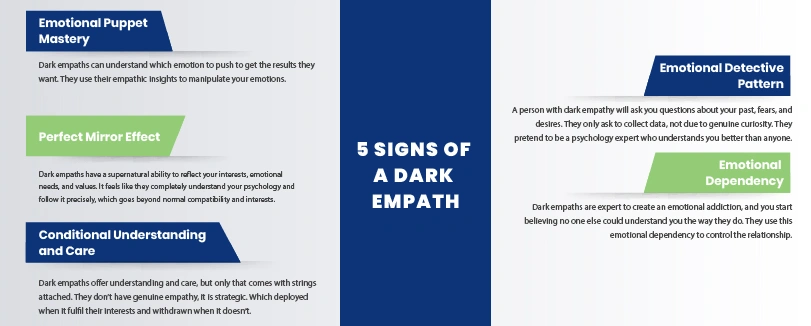
Perfect Mirror Effect
Dark empaths have a supernatural ability to reflect your interests, emotional needs, and values. It feels like they completely understand your psychology and follow it precisely, which goes beyond normal compatibility and interests.
What to observe:
- They appear to share all your interests at the start of the relationship.
- Their personality seems to switch to match and make it too convenient.
- You find yourself quickly thinking we are almost the same, unusually.
- They remember and reference small details regarding your preferences, but it feels calculated rather than caring.
- Their personality appears weirdly flexible or unspecified outside of mirroring you.
Red Flags: You mention any movie, and they immediately show passionate interest in the same actor you discovered. They know enough to appear genuine but lack the deep knowledge that shows authentic interest.
Green Flag: Authentic connection involves both differences and similarities. Someone who possesses healthy empathy will share the same interests but maintain their own unique personality.
Emotional Puppet Mastery
Dark empaths can understand which emotion to push to get the results they want. They use their empathic insights to manipulate your emotions.
What to Observe:
- They always bring up your past traumas or any insecurities to win conflicts during arguments.
- They know exactly what words make you feel guilty, ashamed, or responsible for the problems that are not your fault.
- They use every sensitive piece of information you’ve shared in confidence against you when they feel it is convenient.
- They can immediately change your emotional state from happy to upset, even leaving you confused about what happened.
- They appear to know your triggers better than you do yourself.
Red Flag: While disagreeing about their behavior, they suddenly bring up your difficult relationship with a family member. They know this will weaken you and change the focus away from their negative actions.
Green Flag: Someone genuine will be careful with your sensitivities and use their understanding to support you. They try to make you comfortable during conflicts or arguments.
Conditional Understanding and Care
Dark empaths offer understanding and care, but only that comes with strings attached. They don’t have genuine empathy; it is strategic. Which deployed when it fulfil their interests and withdrawn when it doesn’t.
What to observe:
- They often help you with expectations or to serve their interests.
- They claim to understand what’s best for you better than you do.
- They withdraw their support when you don’t follow their advice or do things how they want.
- They understand your needs but use them to justify their controlling behaviors.
Red Flag: They offer you detailed advice about your career according to their understanding of your goals. But they become cold or criticize you when you choose a different path.
Green Flag: Genuine empath person will support your freedom and growth, even when they disagree with your choices.
✓ Stress & Coping Skills Development
✓Improved Mood & Resilience✓ Telehealth & In-Person Visits
✓ Most Major Insurances Accepted
Emotional Detective Pattern
A person with dark empathy will ask you questions about your past, fears, and desires. They only ask to collect data, not due to genuine curiosity. They pretend to be a psychology expert who understands you better than anyone.
What to Observe:
- They ask a lot of questions at the start of your relationship regarding past relations, traumas, and insecurities.
- Their questions feel structured or strategic, but don’t show that they are naturally curious.
- They pretend to understand your motivations and patterns better than you do.
- Dark empath will offer insights about yourself that feel somehow accurate.
- They appear to be your psychological guide.
Red Flag: In early conversations, they ask you many questions about your childhood, your past relationships, fears, or traumas, if any. They get information to use to manipulate you later.
Green Flag: Authentic curiosity about your world comes from a desire to understand and love you better, not to control you.
Emotional Dependency
Dark empaths are expert to create an emotional addiction, and you start believing no one else could understand you the way they do. They use this emotional dependency to control the relationship.
What to observe:
- You start thinking no one understands me as they do, and then ignore their harmful negative behaviors.
- You begin to feel you can’t be in a relationship with anyone else, because no one else would understand your complexities.
- You feel like you are emotionally dependent on their validation. You want them to interpret your experiences.
- You start doubting your emotional state without their confirmation.
Red Flags: Despite the mistreatment and negative behaviour, you stay in the relationship. It is because you think they are the only one who understands you well.
Green Flag: A person with healthy empathy will encourage you to understand yourself better and feel confident.
Dark Empath vs Narcissist
A person who is a narcissist demonstrates a pattern of arrogant behaviour. Narcissists and dark empaths share some similarities, such as a high sense of self-importance. But they have their individual differences, such as the following:
- Empathic abilities: They possess a high level of cognitive empathy. Contrary to this, a narcissists generally lack effective empathy, which is the ability to emotionally connect with others.
- Self-awareness: They may be aware that they’re doing something wrong, but they continue to do it anyway. On the other hand, narcissists are less aware of how their actions affect others.
- Type of manipulation: Narcissists and dark empaths both manipulate others. But they generally do so in different ways. The dark empath seems to try to mold themselves to your emotions so they can gain your trust. A narcissist will try to impress you with magnificent gestures to win approval.
Dark empaths can easily recognize others’ emotional states and feelings toward them. Narcissists are more self-centered and lack awareness of what others think of them.
How Dark Empathy Develops?
Usually, dark type empathy does not appear on its own. It may develop from emotional sensitivity and unresolved psychological stressors.
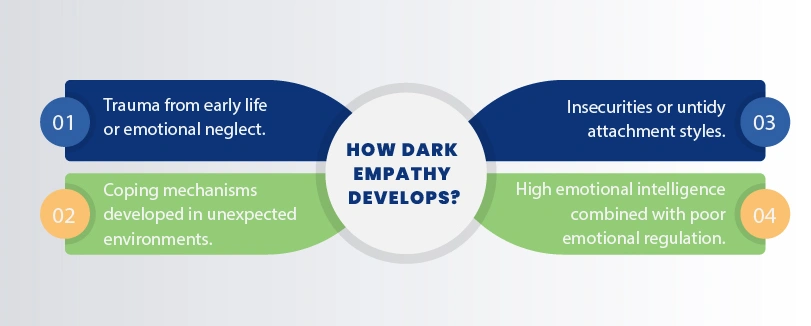
Possible factors that contribute to dark empathy include:
- Trauma from early life or emotional neglect.
- Insecurities or untidy attachment styles.
- Coping mechanisms developed in unexpected environments.
- High emotional intelligence combined with poor emotional regulation.
For some, elevated emotional awareness works as a survival strategy. They use it to anticipate others’ reactions, reduce vulnerability, or maintain a sense of control. Dark empath behaviour can increase interpersonal emotional strain within a relationship.
Impacts of Dark Empathy
It can affect your personal life and relationships. Moreover, it may cause mental harm through clever manipulations and emotional control.
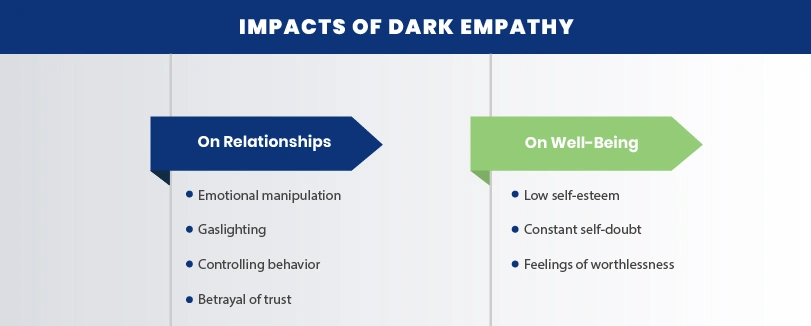
On Relationships
Dark empaths understand others’ feelings without truly caring through their cognitive empathy. It allows them to easily manipulate people. They may pretend to care but are pursuing selfish goals.
Once a relationship develops, they exploit the trust they’ve built. This can result in:
- Emotional manipulation
- Gaslighting
- Controlling behavior
- Betrayal of trust
On Well-Being
They can harm a person’s confidence and overall well-being. Victims may experience the following:
- Low self-esteem
- Constant self-doubt
- Feelings of worthlessness
Treatments for Dark Empathy
People with dark empathy can manage their negative behaviour through various treatments. These approaches are designed to increase self-awareness and develop healthier ways of interaction.
Cognitive Behavioural Therapy (CBT)
Cognitive Behavioral Therapy (CBT) is one of the effective therapies for dark empathetic behavior. It helps them identify and replace damaging thoughts with positive ones. CBT aims to change harmful behaviors and improve emotional regulation. This will teach them to use their empathy more constructively.
Dialectical Behavioural Therapy (DBT)
Another effective treatment approach is Dialectical Behavior Therapy (DBT). DBT helps them by teaching mindfulness, distress tolerance, and interpersonal skills. Dark Empaths can manage their emotions and improve their relationships with these skills.
Psychodynamic
Psychodynamic therapy can also be helpful for this empath type. It helps in exploring past experiences and unconscious motivations that might be contributing to dark empathy traits.
Seek Support from Inland Empire Behavioural Group
Dark empaths possess a complex personality. They show a blend of empathy with darker traits such as psychopathy and narcissism. It is important to be aware of the empathy dark signs and traits. Seek professional help when you see signs in your or your partner’s behaviour.
Inland Empire Behavioural Group is a trustworthy platform offering comprehensive treatments. Whether you are developing dark empathy signs or feeling OCD symptoms, we are here to help you. Our team has professional experts in treating mental health disorders. We offer individualized treatment for your unique mental health needs. You can get mental health care through telepsychiatric services. We offer a safe and warm environment where you can talk about your mental condition freely without fear of judgment.