
Borderline personality disorder (BPD) and bipolar disorder can both cause intense mood changes, impulsivity, irritability, and periods of depression. The main difference is how these symptoms occur over time. BPD involves ongoing difficulties with emotional regulation, relationships, and self-image, while bipolar disorder is characterized by distinct mood episodes, including mania or hypomania. A comprehensive psychiatric evaluation can help determine which condition best explains a person’s symptoms.
BPD vs. Bipolar Disorder at a Glance
| Feature | Borderline Personality Disorder | Bipolar Disorder |
| Category | Personality disorder | Mood disorder |
| Mood shift duration | Minutes to hours | Days to weeks |
| Mood trigger | Usually reactive to events | Often occurs independent of events |
| Core feature | Fear of abandonment, unstable identity | Distinct manic/hypomanic and depressive episodes |
| Onset | Early adulthood, often traceable to adolescence | Can emerge at any time; average onset is in the early-to-mid 20s |
| Typical first-line treatment | Dialectical behavior therapy (DBT) | Mood-stabilizing medication + Psychotherapy |
What Is Borderline Personality Disorder?
BPD is a personality disorder characterized by extensive instability in emotions, self-image, and interpersonal relationships. The DSM-5-TR requires five or more of nine criteria, including frantic efforts to avoid abandonment, unstable relationships, identity disturbance, impulsivity, recurrent suicidal behavior, affective instability, chronic emptiness, inappropriate anger, and transient stress-related paranoia or dissociation.
People with this disorder experience emotions with unusual intensity and take longer than average to return to baseline after an emotional trigger. Relationships often swing between idealization and devaluation. A perceived rejection, even a delayed text reply, can trigger a wave of panic, anger, or self-destructive urges within minutes.
It affects an estimated 1% to 6% of the general population. Rates run considerably higher in clinical settings, since Borderline personality disorder frequently drives people toward psychiatric care.
What Is Bipolar Disorder?
It is a mood disorder defined by episodic shifts between mania (or hypomania) and depression. It is separated by periods of stable mood. The DSM-5-TR recognizes several subtypes:
- Bipolar I involves at least one full manic episode lasting seven days or requiring hospitalization. It is often accompanied by major depressive episodes.
- Bipolar II involves at least one hypomanic episode and one major depressive episode, without a full manic episode.
- Cyclothymic disorder involves numerous periods of hypomanic and depressive symptoms that don’t meet full episode criteria. They persist for at least two years.
What Causes BPD and Bipolar Disorder?
Both disorders arise from a combination of genetic vulnerability and environmental exposure, though the specific pathways differ.
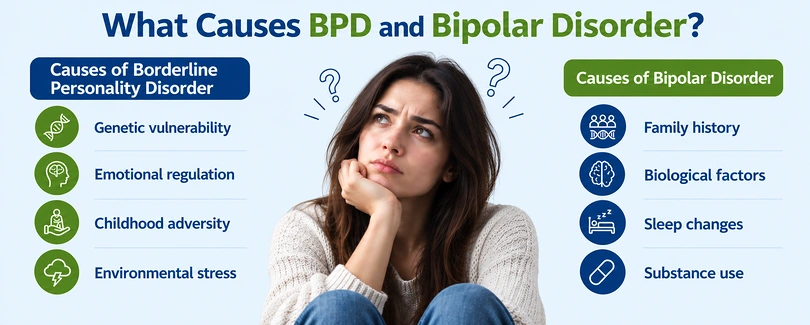
Causes of Borderline Personality Disorder
- Genetic vulnerability: Twin studies suggest that genetic factors contribute to the development of borderline personality disorder (BPD). A large population-based twin study estimated that about 55% of the variation in a general BPD liability factor was attributable to genetic factors, with the remaining variation largely associated with environmental influences.
- Emotional regulation: A tendency to experience emotions intensely or have difficulty regulating them may increase vulnerability.
- Childhood adversity: Trauma, neglect, and inconsistent caregiving are associated with this behavior in some people, but they are not required for the disorder to develop.
- Environmental stress: Difficult relationships and stressful experiences may interact with genetic vulnerability and contribute to symptoms.
Causes of bipolar disorder
- Family history: Having a parent, sibling, or child with this disorder increases the likelihood of developing the condition. Estimates suggest a risk of around 5% to 10% for people with an affected first-degree relative.
- Biological factors: Changes in brain signaling and systems that regulate mood and sleep may contribute to this condition.
- Sleep changes: Significant sleep disruption can sometimes trigger or worsen mood episodes.
- Stress: Major or ongoing stress can contribute to the onset or worsening of episodes in people who are already vulnerable.
- Substance use: Alcohol and other substances may disrupt sleep and mood and can trigger or intensify episodes in some people.
What Does Mania Look Like in Bipolar Disorder?
Mania is more than feeling happy or confident. It involves a clear change in mood that lasts at least seven days. During a manic episode, a person feels unusually energized and needs much less sleep without feeling tired. They talk more than usual and have racing thoughts, become easily distracted, and feel powerful.
Hypomania involves similar symptoms but is less severe. It lasts at least four consecutive days. For BPD vs. bipolar disorder, one important distinction is that mania is sustained. It does not typically appear as a brief mood change that lasts only a few hours. The person shows a noticeable change in mood, energy, activity, and behavior that continues across multiple days.
How Is BPD Different From Bipolar II?
Borderline personality disorder and Bipolar II are confused because they involve mood instability, impulsivity, and depressive symptoms. But it requires a distinct hypomanic episode lasting at least four days. Borderline personality disorder produces reactive mood shifts lasting hours.
Bipolar II disorder includes hypomania, which causes a noticeable increase in energy that lasts for at least four days. Borderline personality disorder does not include hypomania. Its mood changes are often shorter and happen in response to relationship stress, rejection, or other emotional situations. These shifts are dramatic but are different from a sustained hypomanic episode.
This overlap makes it both confusing and difficult to distinguish. A study found that people with borderline personality disorder were more likely to report having previously been diagnosed with bipolar disorder even when a structured assessment did not confirm this disorder.
What Are the Symptom Differences Between BPD and Bipolar?
Both disorders share similar as well as specific features. They include the following:
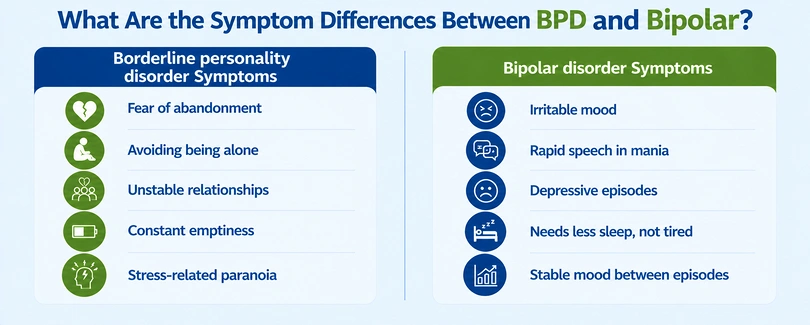
Borderline personality disorder Symptoms
- Strong fear of abandonment
- Efforts to avoid being left alone
- Intense and unstable relationships
- An unstable sense of identity
- Ongoing feelings of emptiness
- Paranoia that may occur during periods of stress
Bipolar disorder Symptoms
- Irritable mood lasting several days
- Needing much less sleep without feeling tired
- Rapid speech during mania or hypomania
- Depressive episodes that last two weeks
- Periods of stable mood between episodes.
Shared Symptoms
- Impulsive behaviors
- Increased risk of self-harm or suicide
- Irritability or anger
BPD Mood Swings vs Bipolar Mood Episodes
The following scenarios illustrate common presentations of both disorders. They combine details from multiple hypothetical cases. But they are not meant for self-diagnosis.
A woman in her late 20s with Borderline personality disorder describes her week as a series of emotional hits. It was directly tied to her relationships. However, a supportive text from her partner let her feel secure. At the same time, a slow reply makes her feel abandoned. By dinner, a reassuring call resets her mood. This pattern repeats daily.
A man in his early 30s with bipolar I describes a two-week routine where he slept three hours a night without feeling tired. He started three new business ventures and spent well beyond his budget. He talked so fast his coworkers struggled to follow him. Nothing external triggered this mood. Two weeks later, he crashed into a depressive episode that lasted a month. It involved sleeping twelve hours a day and being unable to get out of bed.
Which Is Worse: BPD or Bipolar Disorder?
Both conditions are not inherently worse than the other. Both can be serious mental health conditions. The level of severity depends on the person’s symptoms, safety risks, and other conditions they may have.
BPD can be severe when intense emotions, impulsive behavior, self-harm, suicidal thoughts, or unstable relationships affect a person’s life. Bipolar disorder can also become severe, particularly during major depression, mania, risky behavior, or major changes in functioning.
The important question is not which diagnosis is worse, but how severe the symptoms are and what treatment can help manage them. But if you have suicidal or self-harm thoughts, immediately call 988.
Can I Have BPD and Bipolar Disorder Together?
A systematic review and meta-analysis found the prevalence of BPD among people with bipolar disorder was 21.6 percent. The prevalence of bipolar disorder among people with Borderline personality disorder was 18.5 percent. (Fornaro et al., 2016, Journal of Affective Disorders)
Comorbid borderline personality disorder and bipolar disorder complicates treatment. Mood-stabilizing medication addresses the bipolar component. But BPD’s interpersonal and identity-based symptoms typically require psychotherapy alongside medication. A treatment plan for only one condition tends to leave meaningful symptoms unmanaged.
Can BPD and Bipolar Disorder Be Misdiagnosed as Each Other?
Yes, both these conditions are sometimes mistaken for each other because of the similar symptoms. The main difference lies in the pattern of symptoms over time. Borderline personality disorder often involves ongoing difficulties with emotions. Bipolar disorder involves distinct mood episodes. A professional mental health provider can evaluate both accurately.
Get the Right Diagnosis and Support at Inland Empire Behavioral Group
At Inland Empire Behavioral Group, our providers carefully look at your symptoms, history, and mood patterns to help clarify what you are experiencing. Get personalized guidance and a treatment plan around your needs.
How Are BPD and Bipolar Disorder Diagnosed?
Both conditions are diagnosed through a structured clinical evaluation conducted by a licensed psychiatrist using DSM-5-TR criteria alongside a detailed history of symptom timing, triggers, and duration.
A thorough evaluation typically includes a clinical interview covering family psychiatric history, a review of mood episode timing and triggers, input from family members or partners when available, and screening for co-occurring conditions like substance use, ADHD, or PTSD. Because BPD and bipolar disorder are distinguished largely by the duration and trigger pattern of mood shifts, a single intake session rarely provides enough information. An accurate diagnosis often requires tracking mood patterns over multiple sessions.
How Is BPD Treated?

Borderline personality disorder is treated mainly with psychotherapy. It helps people to manage their emotions and build healthier relationships. The following are the treatment approaches:
Dialectical behavior therapy (DBT): This is the most well-studied approach for BPD. It helps to teach skills for managing strong emotions, handling distress, and improving relationships.
Individual or Group therapy: Both of these are suggested by your provider. They help address relationship difficulties, self-image, and emotional patterns.
Mentalization-based therapy: This is an evidence-based psychotherapy that helps people to understand their own thoughts and emotions. It also helps to understand the perspective of other people.
Medication: There is no medication specifically approved to treat borderline personality disorder (BPD). However, healthcare providers may prescribe antidepressants, mood stabilizers, or antipsychotic medications to treat co-occurring conditions such as depression, bipolar disorder, or psychosis, or to target specific symptoms when appropriate. Medication is generally used alongside psychotherapy rather than as the primary treatment for BPD.
How Is Bipolar Disorder Treated?
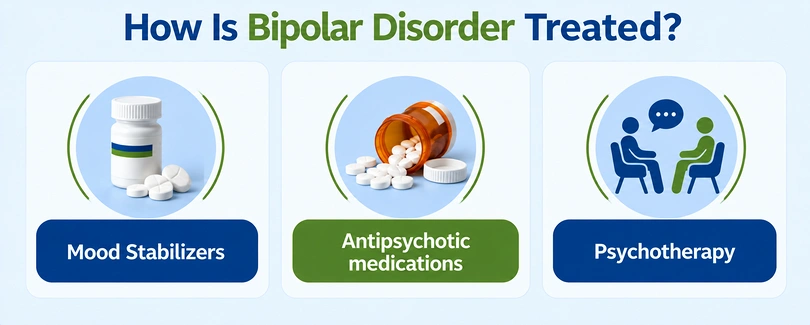
This is usually treated with therapy combined with medication. The treatment focuses on managing the current mood episodes and reducing the risk of future episodes.
Mood Stabilizers: Certain medications help manage and prevent mood episodes.
Antipsychotic medications: The medications prescribed by the licensed provider treat mania, depression, or other symptoms depending on your unique needs.
Psychotherapy: It involves Cognitive Behavioral Therapy (CBT) that helps you recognize the warning signs, manage symptoms, and stay consistent with treatment.
Get an Accurate Diagnosis at Inland Empire Behavioral Group
If you are living with mood instability, impulsivity, or a diagnosis that takes a toll. Then worry not; Inland Empire Behavioral Group provides thorough psychiatric evaluations that distinguish BPD, bipolar disorder, and overlapping conditions, so your treatment plan actually matches what you’re living with.
Why Choose Inland Empire Behavioral Group:
- Work with a team bringing 15+ years of combined clinical experience
- Access 33+ licensed psychiatric providers across the practice
- Choose in-person care at 4 California office locations or connect through telepsychiatry from anywhere
- Use insurance coverage from major providers including Aetna, Cigna, UnitedHealthcare, Anthem Blue Cross, Blue Shield, Medicare, Medi-Cal, and more.
- Our locations include Anaheim, CA; Ontario, CA; Long Beach, CA, and Telehealth available across California
Contact Inland Empire Behavioral Group at (909) 429-3244