
Do you feel a deep, uncontrollable need for your mother’s approval before making any major life decision? Or, do you tend to date people who share the same toxic traits as your mother?
You might be experiencing “mommy issues”!
Mothers play a vital role in the child’s development, and children develop their first attachments with their mothers. The care and love a child receives in their early years have a significant impact on their well-being.
Mommy issues are a psychological pattern shaped by early attachment wounds. These are wounds that stem from a strained maternal relationship during the formative years, which severely influence adult relationships.
This usually happens when a parent is overly critical, absent, or overbearing, which influences your ability to form secure relationships. It severely influences trust, love, and how you see yourself.
However, these attachment issues are manageable, and one can move from an insecure attachment to a more secure attachment with professional help.
Understanding Mommy Issues
Mommy issues refer to challenges stemming from a tense relationship with mothers. It can lead to fear of abandonment, difficulty trusting others, guilt, or feeling like one has to be perfect, and it leads to emotional difficulties in adulthood.
As per the research, infants are born with a need to form an attachment to their mother or mother figures who take care of them.
The relationship between mother and child is one of the most important aspects of life. If a mother provides consistent care and love to the child, they can form healthy relationships throughout their life. On the other hand, if a child experiences neglect or abuse from their mother, it will lead them to low self-worth, a lack of emotional control, and attachment issues.
However, if the mother fails to set boundaries or is anxious, depressed, or chronically stressed, it severely influences the child.
The Psychology Behind Mommy Issues
Mommy issues are more prevalent in female children, and daddy issues are more common in males. Some notable psychological theories that help explain mommy issues include.
- Oedipus Complex: Freud’s theory explores the feelings of attraction some male children feel towards their mother, and seek their mother’s affection and attention.
- Bowlby’s Attachment Theory: In this theory, Bowlby said that attachment styles formed in early childhood can dictate the upcoming relationships in adulthood, ie, romantic relationships. Many times, people who have issues with their mothers develop an insecure attachment style. So, mommy issues involve unresolved problems that lead to attachment issues.
Signs of Mommy Issues
Mommy issues are attachment issues. Every individual has different attachment styles and differences in symptoms. Here are some of the common signs:

Anxious Attachment
People with an anxious attachment style have a variety of traits. Some of the common anxious attachment signs include:
- Low self-esteem
- Feels like they are not appreciated by their loved ones
- Remain in fear of being abandoned
- Invest so much effort in relationships
- Neglecting personal boundaries in relationships
- Lack of self-worth
- Hyper-awareness of others pulling away from them
- Lack of trust in others
- Difficulty expressing affection
- Persistent feelings of anxiety or depression
People experiencing anxious attachment remain insecure, which leads to behavioral changes that make partners feel threatened. It usually stems from experiencing inconsistent parenting from caregivers in childhood.
Avoidant Attachment
Some common signs that help in identifying an avoidant attachment include:
- Discomfort with intimacy
- Distant from partner
- perceive conflict as a threat
- Inadequate skills in conflict resolution
- Thinks that people might not meet their needs
- Avoid engaging in social relationships
Avoidant attachment stems from childhood if one may have neglectful parents, or parents who did not meet their needs in childhood.
Disorganized Attachment
People experiencing disorganized attachment style may have a combination of the symptoms, including both anxious and avoidant insecure attachment styles.
Here are some of the common signs of disorganized attachment:
- Emotionally shutdown
- Anger that occurs suddenly, without any clear reason
- Aggression
- Confusion
Note: All these signs are complex and deeply personal, but with the right professional support it can be managed.
Examples of Mommy Issues
The examples of mommy issues can be witnessed in everyday life. Here are some of the common examples:
- Apologize for asking about your needs, such as asking a question, expressing a suggestion, taking time, or feeling guilty for random stuff.
- Putting efforts to get love, such as over-giving, over-explaining, because they feel like they might be replaced, or left alone.
- Overly dependence on mother, or feeling childish being around, involves some odd changes, such as body freezes, voice changes, even when you planned to stay calm and adult.
- Fear of getting close and abandonment at the same time.
- Guilty for making decisions on your own, it makes one remain in fear, such as choosing a partner, or making a decision your mom does not like, which triggers guilt.
Mommy Issues in Women Vs Men
Mommy issues show up differently in men and women. It is because these are shaped by expectations of society and individual experiences. For women, these issues center around a lack of self-worth and trust in relationships, while for men, it might more frequently relate to being dependent on mothers.
Mommy Issues in Men
Mommy issues in men are usually described as “mama’s boy“, which can be described as men being too dependent or too close to their mothers. These issues stem from a disrupted early bonding experience. It can lead to several issues later in life, as they have been briefed by their mothers all the time, such as expectations of romantic relationships or mentally pitting their romantic partners. Moreover, they remain in deep insecurity, fear of being left alone, or having disrespectful behavior toward women.
Mommy Issues in Women
Mommy issues in women occur from unresolved, traumatic, or early attachment wounds with their mother. It leads to trust issues, extreme fear of abandonment, relationship instability, fear of intimacy, or extreme emotional dependency. These issues severely impact the overall personality, self-confidence, and self-image later in life. Moreover, it can also lead to difficulty trusting others since the person they trusted for their primary care let them down in this way.
The Impact of Mommy Issues
Everyone’s experience with mommy issues is different. Some people have very mild signs, and some experience extreme symptoms that severely impact everyday life. It results in unhealthy romantic partners or distant relationships with your children.
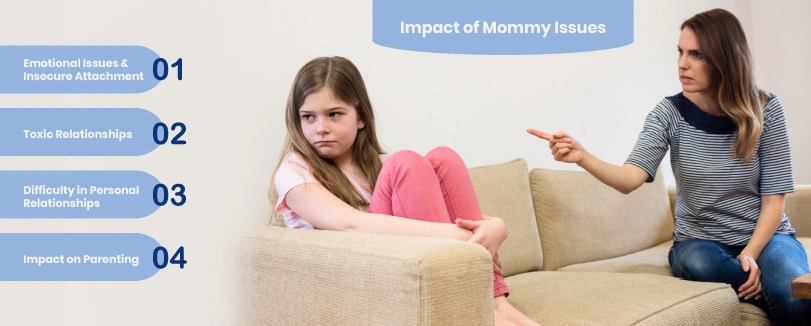
Here is how mommy issues impact someone:
1. Emotional issues and insecure attachment styles
These issues cause emotional problems in adult life, such as the development of insecure attachment styles. People with unresolved issues prefer avoidant or anxious attachment styles, where they feel compelled to shun closeness or become overly dependent on their partners for everything. These attachment styles can significantly hamper one’s ability to form healthy relationships.
2. Toxic Relationships
People having unresolved mommy issues are prone to engage in toxic relationships. Moreover, not having a healthy relationship with a mother can set an example that leads them to tolerate similar dynamics in their adult romantic relationships. This pattern can lead one to finding a partner who exhibits the same traits.
3. Difficulty in Personal Relationships
Everyone thinks that mommy issues can only impact relationships, but put it beyond that! It severely impacts personal relationships, such as friendships and family connections. It is because individuals with these problems may struggle with trust, find it hard to open up to others, or become insecure and dependent on friends for emotional support. These interplays lead to strained relationships, intense, long-term, unfulfilling connections.
4. Impact on Parenting
People who have experienced mommy issues can affect the next generation. Parents with unresolved issues lead to overbearing and neglectful behaviors. They are unable to provide consistent emotional support or unintentionally transfer their own anxieties onto their children.
However, recognizing these issues is important for breaking this cycle and helps in maintaining healthy relationships with their children.
The Root Causes: Why It Happens
A poor relationship with a child and their mother can lead to lasting psychological effects. It makes one develop mommy issues in later life. These issues stem from overly permissive and overprotective mothers. Most mothers focus on becoming their child’s best friend, instead of providing emotional support and maternal leadership. However, these are the exact types of relationships that can become toxic and cause long-term damage.
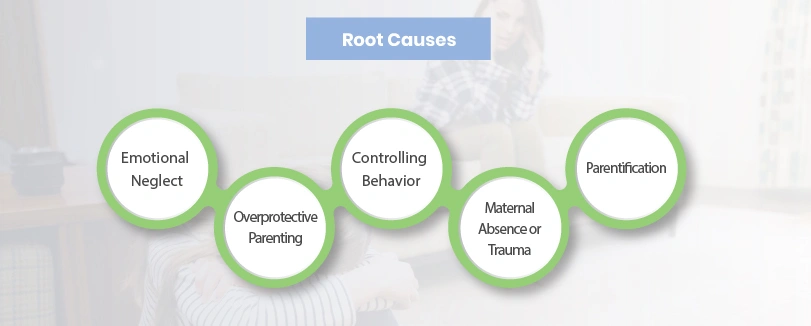
Here are some of the factors that can be the root cause of mommy issues:
Emotional Neglect
Emotional neglect is one of the main causes of mommy issues. A mother who provides all the physical needs, such as food and clothing, but is unable to provide the emotional support, or remains emotionally cold or dismissive, leads the child to develop these issues later in life. Also, failing to meet a child’s basic emotional or physical needs often leads to fear of abandonment, which hinders their ability to develop healthy relationships.
Overprotective Parenting
Mothers who are overly protective rely on their child for their own emotional fulfillment. It severely prevents the child from developing their own independent identity, and they remain dependent on their mothers in every little thing. Moreover, excessive overprotecting can also shake a child’s confidence and ability to make their own decisions as an adult.
Controlling Behavior
Growing up in an environment where the mothers are overly critical or set unrealistic expectations can lead to a lack of self-esteem and a lack of confidence. Moreover, the child may struggle with perfectionism and remain in constant need for validation from others.
Also, they use manipulation or humiliation as a form of control, which can cause trust issues with women in adult life.
Maternal Absence or Trauma
Lack of a mother figure in childhood can also be one of the major issues that can lead to money issues. These can be because of multiple reasons, such as the death of a mother, leaving the child alone. Moreover, if a child has experienced abuse such as physical, emotional, or sexual abuse at the hands of a mother often leads to complex trauma (C-PTSD) and severe attachment disorders.
Parentification
It occurs when the roles are changed, as the child is forced to take on the emotional or physical responsibilities of the parent. These can be caring for a mother who is sick, addicted, or acting as the mother’s emotional support system.
How to Deal with Mommy Issues?
Mommy issues can cause severe trouble in managing relationships. However, it can be treated with the right combination of medications, therapies, and lifestyle changes. Through therapies, one may learn new behaviors and thought processes that allow them to overcome any problems interfering with their relationships as an adult.

Psychotherapies can even help in developing a healthy relationship and sorting out unresolved issues.
How a Mental Health Professional Can Help?
Mental health professionals use various therapies to help individuals address the strongly rooted effects of early life experiences. Some of the common therapies that can help include the following:
Cognitive Behavioral Therapy (CBT), It can help by challenging and reframing negative thought patterns. It changes the thoughts that lead to self-abandonment, lack of self-worth, and confidence. A therapist intervenes in the thoughts through talk and changes those thoughts into positive, desirable thoughts. Moreover, Eye Movement Desensitization Reprocessing (EMDR) is also very effective in overcoming trauma by processing past experiences that affect emotional well-being.
Moreover, Attachment-focused therapy helps by specifically targeting the attachment wounds formed in childhood and helps to repair relationships. Psychodynamic Therapy is also considered to be very effective as it helps process the unconscious patterns and early childhood experiences to understand current behaviors.
Additionally, medications can help with the combination of therapies, such as anti-anxiety, antidepressants, SSRIs, SNRIs, and more. Also, maintaining a healthy lifestyle along with the treatments helps in more effective results, such as setting boundaries, practicing reparenting, or choosing a support system.
Take the First Step Towards Healing at Inland Empire Behavioral Group
Inland Empire Behavioral Group offers compassionate care to individuals who are suffering from mommy issues, trauma, depression, or any other mental health issues. Our team of experts is dedicated to providing personalized treatments in a safe and nurturing environment. We have decades of experience in providing therapies with holistic care to improve your social, psychological, and emotional well-being. You can also get telehealth services with ease from the comfort of your home.
We are here to provide the support and care you need to live a happy, fulfilling life.
Book your consultations today!