
Have you ever found yourself overthinking your partner’s texts, constantly needing reassurance, or worrying they’ll leave even when things seem fine?
If yes, you may be experiencing relationship anxiety!
Relationship is the source of comfort; it’s a union between two people, which brings companionship, joy, and a sense of belonging. But it can also bring stress and worries, and lead to relationship anxiety!
It often leads to fear of intimacy, fear of abandonment, or a persistent sense of insecurity and doubt within a relationship. Anxiety in relationships stems from past experiences, traumas, fears of rejection, or insecurities. It is very common and can show up even in the healthiest relationships.
Approximately 50% of Americans report stress regarding relationships, according to new data from the Pew Research Center. However, this common concern often leads to a counterproductive cycle.
The more someone tries to ‘protect’ their relationship, the more stress and miscommunication they may create.
However, understanding the roots of these feelings is the first step to reclaiming your peace of mind.
Understanding Relationship Anxiety
Relationship anxiety is a chronic feeling of unease, insecurity, and fear about intimacy. This anxious feeling makes one insecure about their partner’s love or commitment to them, even when there’s no clear reason. It triggers behaviors such as overanalyzing small talk, pulling away to avoid rejection, or being clingy to maintain a connection. This usually comes up in romantic relationships and goes beyond jealousy, hesitations, or reassurance-seeking.
Anxiety in relationships stems from feelings of unworthiness, abandonment issues, or betrayal and leads to excessive worry. It usually shows up early in relationship to long-term relationships. It significantly impacts the quality of the relationship and the individual’s overall well-being.
Moreover, DSM-5-TR1 (the latest version of the Diagnostic and Statistical Manual of Mental Disorders) contains diagnoses related to anxiety, including in the context of relationships. But relationship anxiety is not a clinical diagnosis itself.
9 Key Signs of Relationship Anxiety
Anxiety in relationships occurs in one or multiple ways. Its symptoms often depend on childhood experiences, past relationships, and other experiences. While anxiety in a relationship looks different for each person,
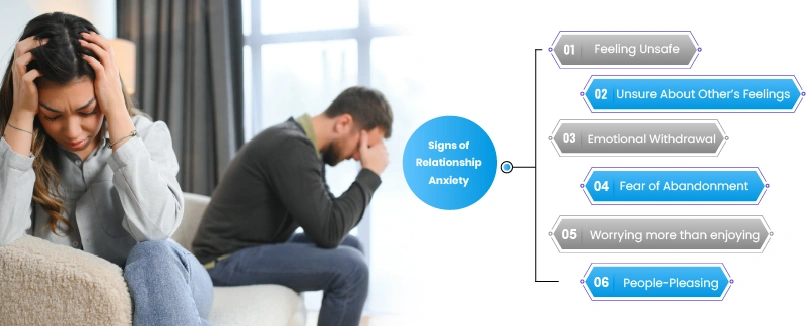
here are some common ways it shows up.
1. Feeling Unsafe
If a person felt unsafe during the early years of life from their caregiver and parents, it severely affects their relationship in later life. These attachment patterns lead to anxiety, avoidance, or make it difficult to form close relationships. Moreover, if an individual has been betrayed in previous romantic relationships, this can also impact future connections. All this leads to feeling unsafe and insecure, even within a healthy partnership.
2. Doubting the Other Person’s Feelings
Thinking about the partner is a good thing, but doubting the intention and love of the partner could be a sign of relationship anxiety.
3. Seeking Frequent Reassurance
People experiencing relationship anxiety often ask for reassurance, such as repeated affirmations of love and commitment. However, doing it occasionally is a normal thing, but if an individual is always in constant need of affirmation and reassurance from one partner, it can be a sign of anxiety.
4. Constant Worries about the Relationship
Someone with symptoms of anxiety may overly think about the conversations, ruminate on whether their partner is upset, or remain in fear that small misunderstandings mean something bigger.
5. Emotional Withdrawal
If anxiety becomes severe, it makes a person step back from communication or spend more time alone. Taking alone time is a normal and healthy part of a partnership. Still, when someone is overly thinking and remains in constant distress, or is emotionally unstable, it might be due to relationship anxiety.
6. Worrying more than enjoying
Relationships come with challenges, good and bad days. However, people who are anxious in a relationship are not able to truly relax in a relationship. The pervasive fear overshadows joy and causes unnecessary anxiety.
7. Fear of Abandonment
A constant fear that one partner will leave, and the other will be left behind, even when things are going well. It is because relationship anxiety may be at play.
8. Finding Problems Everywhere
People experiencing anxiety in relationships are in a constant state of emotional dysregulation and hypervigilance, which makes them seek out issues or concerns in relationships even when there aren’t any. A small change of tone, or an interaction that feels a little off, can all make someone fall into the anxiety spiral.
9. People-Pleasing
Anxiety in relationships makes one do pleasing, neglecting their own needs and happiness to make the other partner happy. This can create relationship anxiety and lead to co-dependent behaviors that are not helpful for a healthy relationship.
The Effects of Relationship Anxiety
Intense anxiety in a relationship can have severe negative reactions and consequences in everyday life, including:
- Depression
- Anxiety
- Sweating and trembling
- Lack of focus
It makes one exhibit confrontational and controlling behavior towards their partner, such as knowing where they are going, why going, might be cheating, who they are speaking to, and even what they’re wearing. This can be attributed to an anxious attachment type as well.
This anxious nature makes one give up on the relationship and leads to a lack of confidence, insecurity, and anxiety, creating a self-fulfilling belief. All of this leads to diminishing the relationship and makes one feel like no matter how much effort they put in, their relationship will end in shambles.
What are the Causes of Relationship Anxiety?
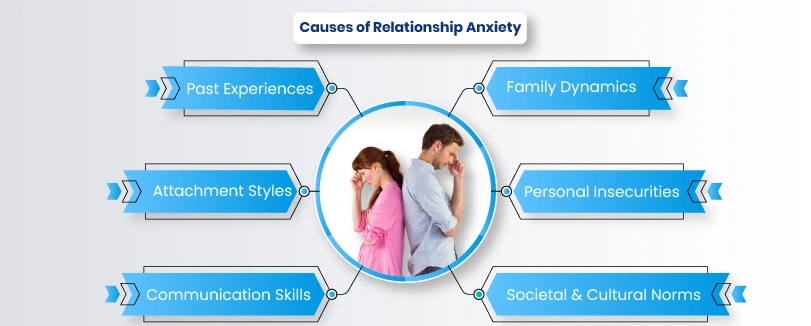
Everyone experiences some levels of anxiety in relationships, but some people experience it more intensely due to their own unique experiences. Here are a few of the most common causes:
Past Experiences
Past experiences play a major role in the contribution of anxiety in relationships, especially if the new event has similar emotions and feelings that one may have had during the past event. Experiences of emotional, physical, or sexual abuse can leave deep scars that affect an individual’s ability to trust and feel safe in relationships.
Past experiences manifest into new relationships, such as being dumped unexpectedly, being betrayed, and even creating a false idea about the direction the relationship was heading.
Attachment Styles
This can also be an important factor in the development of relationship anxiety. Early attachment experiences with caregivers shape how individuals relate to others in adulthood. An insecure attachment style, such as anxious-preoccupied or avoidant, can contribute to anxiety.
Communication Skills
Communication is the key to healthy relationships. Not communicating your feelings with your partner, in the state of your relationship, can lead to the development of relationship anxiety.
Family Dynamics
Growing up in an environment with unstable or unhealthy relationships can influence one’s perception of relationships. The early years build the overall personality and perspective of life and eventually contribute to anxiety.
Personal Insecurities
People having low self-esteem and self-worth can cause individuals to doubt their partner’s love and commitment, which eventually leads to anxiety.
Societal & Cultural Norms
Cultural and societal norms, such as pressure of marriage, gender roles, and expectations from partners, can also contribute to the development of anxiety.
How to Deal with Relationship Anxiety?
Anxiety in relationships can severely impact several areas of life. Finding the proper support, including learning how to soothe yourself, can help you navigate it and calm your fears. Here are some ways to cope with anxiety in relationships.
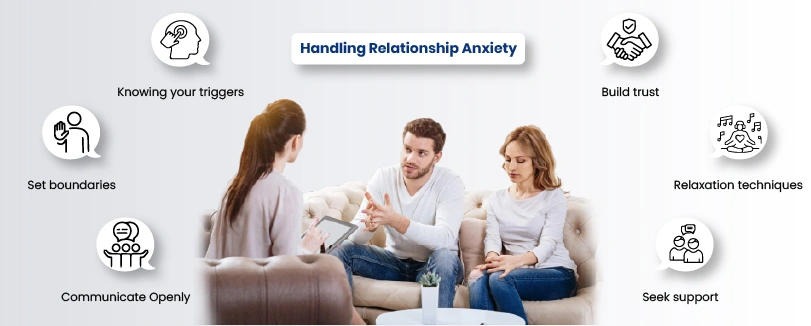
- Knowing your triggers: start noticing the signs of anxiety and how it gets triggered, which sets off your anxiety.
- Set boundaries: Setting boundaries is an important part of well-being; it helps manage anxiety. Respecting each other in relationships provides a sense of security and mutual respect.
- Communicate Openly: Talking about the issues and insecurities helps build a better understanding and reduces anxiety.
- Build trust: Trust is the main foundation of any relationship. To build positive relationships, trust is a major part of life.
- Relaxation techniques: Practices like exercises, meditation, and deep breathing can help manage anxiety.
- Seek support: Talking to friends, family, or support groups about the problems in life reduces anxiety.
When to Seek Help?
If you feel like symptoms are getting out of control, get professional support immediately. You don’t have to wait for a “crisis” to seek help. Anxiety can disrupt relationships as well as quality of life, such as sleep, work, or the ability to enjoy the present moment. If the anxiety symptoms are leading you to compulsive behaviors, such as constant reassurance seeking or monitoring your partner, get help from a professional expert.
Key Diagnosis
To diagnose mental health disorders, therapists rely on the Diagnostic and Statistical Manual of Mental Disorders (DSM-5), published by the American Psychiatric Association. This manual provides standardized diagnostic criteria to ensure that diagnoses are consistent and accurate.
While there is no official diagnosis for “relationship anxiety,” it can fall under recognized conditions like generalized anxiety disorder or social anxiety disorder. For a diagnosis, a healthcare professional conducts some questionnaires with the person who is suffering and conducts interviews with the caregivers and other family members to diagnose the root cause.
Anxiety affects the ability to function normally in your daily life, including in relationships.
Professional Treatment
It is a treatable condition with the right combination of treatments. A mental health professional recommends treatments as per the severity and root cause of the condition.
Cognitive Behavioral Therapy (CBT) is considered to be the gold standard treatment for managing anxiety symptoms. It helps change the thought patterns that lead to fears. An individual gets anxious and thinks negatively, such as assuming the worst or constantly seeking validation. However, CBT teaches to challenge those negative thoughts and replace them with more realistic and balanced ones.
Furthermore, mental health experts also recommend Attachment-Based Therapy, which helps in understanding past experiences or tragic events that affect the attachment styles. Through this, people can build more secure, confident connections.
Also, Couples Counseling is a helpful tool as it facilitates better communication, helps identify negative interaction patterns, and fosters a sense of safety.
Mental health experts also prescribe medications, such as antidepressants (such as SSRIs) or anti-anxiety medication, to manage intense symptoms and make therapies work better.
Get Relationship Anxiety Support at Inland Empire Behavioral Group
If you find yourself overly concerned about your partner’s behavior, feel insecure in your relationship, help is out there!
Inland Empire Behavioral Group is a leading platform that provides comprehensive, evidence-based treatments. Whether you are navigating anxiety, ADHD, PTSD, OCD, or other conditions, we are here to help.
Our experts have decades of experience in treating mental health disorders. We offer individualized treatment plans designed to address your unique needs. You can also get evidence-based care, all around the US, through telepsychiatric services. We offer a warm and welcoming environment where you can talk about your issues without fear of judgment.
Let us help you change your life.
Reach out to us today, and book your initial consultation now!