
The chameleon effect is a phenomenon in which we mimic others. We start mimicking the manners, gestures, and facial expressions of the people we interact with most often. You unconsciously start making behavioral changes to match the behavior of people in your close circle. This phenomenon is named after the animal that changes the appearance of its skin to blend into any environment it finds itself in.
You may have noticed a friend is using your favourite phrase or hand gestures, and you are doing the same. This chameleon effect and action are completely normal. Everyone has experienced this effect at some point in their lives.
Why is it called the Chameleon Effect in Psychology?
We need to understand the chameleon to illustrate the effect more clearly. The chameleon, as a reptile, changes its skin color and patterns to various combinations. Their superficial layer and underlayer work together to create camouflage, a defence mechanism against predators. Therefore, it is called the chameleon effect in psychology. It emphasizes the social signaling and etiquette that people expect from one another in certain situations.
Why does the Chameleon Effect Happen?
Mimicking someone is absolutely normal, which we all do regularly without realizing it. Sometimes we imitate someone for fun, but the reasons we mimic others remain unclear subconsciously. It is worth noting that the term mimicking can sometimes take a negative connotation. But it simply means copying, and in some cases, it is done without any harm.
How the Chameleon Effect Works
People mimic others in two ways when it comes to bodily gestures. One of the most common ways of the chameleon is mirrorwise, and another one is anatomical mimicry.
- Mirrorwise mimicry: When someone mimics the other person mirrorwise, they do the opposite of what the person being mimicked is doing. It means if a person moves their right hand in a specific gesture while talking, the mimicker will move their left hand in the same gesture while talking.
- Anatomical mimicry: You can also mimic another person anatomically. In this way, you make the exact movements as the person you are mirroring. It means that if a person taps their left foot while working on a laptop, you’ll also tap your left foot.
Although the differences between these two mimicking ways might seem small, they both have different social consequences.
Psychological Chameleon Example
We may not even notice the chameleon, or it is often subtle. Some examples of the phenomenon include:
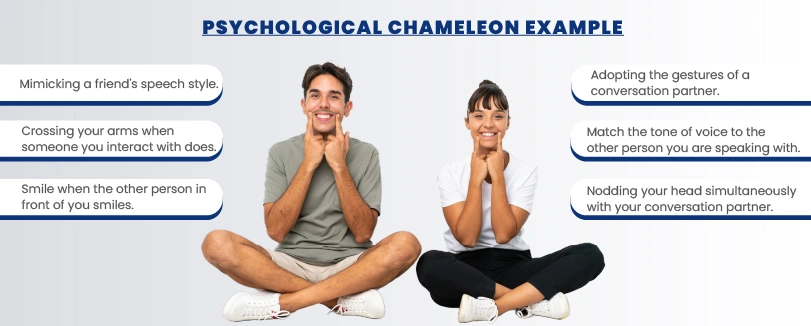
- Mimicking a friend’s speech style.
- Crossing your arms and legs when someone you interact with does.
- Smile when the other person in front of you smiles.
- Imitating others’ posture in a meeting or gathering.
- Adopting the gestures of a conversation partner.
- Match the tone of voice to the other person you are speaking with.
How Does the Chameleon Effect Show Up in Our Daily Lives?
If we go back to historical events, the chameleon has positive outcomes in difficult situations. For example, For example, surviving mimicry, if a person is standing still in the presence of any danger around, others with this person will immediately mimic that posture to ensure survival. Let’s discuss how the chameleon effect shows up in our daily lives.
When Hanging Out With Friends
Today, the chameleon effect changes our behavior when we hang out with our friends. When we share good or bad things in our lives with friends, we reflect their posture, expressions, and energy. Smiling is a common example of unintentional mimicry. Human beings naturally start smiling when another person smiles at them. Smiles are more infectious, and humans find smiling faces more attractive than non-smiling faces.
Positive First Impression
The chameleon effect influences our behavior when we meet new people, and we want to impress them. For example, the head of the company, the big client we’re hoping to work with, or the first date with the person you like. When we try to fit in and be accepted by others, the chameleon can increase our chances of achieving this.
Make it Look Natural
Whenever we mimic someone, we do not realize it is happening. Although there are times when we intentionally mimic others’ manners, expressions, or postures. It is perceived that imitation is a form of flattery, but in many cases, people do intentional mimicry to be accepted and liked by others. It is necessary to understand when someone is mirroring you in a natural manner or intentionally. When a person tries to convince you about something you don’t believe to be true, then the chameleon effect might fail.
You should always trust your gut instincts about others. Trust your guts, especially when their behavior seems intentional, to get you to like or accept them. The chameleon can blend effectively, but if the other person’s behavior stands out, it may be deception at play.
Mimicry With Intention
Generally, the chameleon effect is an involuntary process. But there are definite benefits of blending in with your environment. When attuned with others in your company, you show them care and understanding, deepening the relationship. Mimicry and mirroring can be an effective tool if you want to help someone feel more comfortable.
What is Psychological Chameleon Personality?
Individuals who can perfectly adapt their behavior, communication, and attitude to suit different situations have a chameleon personality. This is called adaptability and an acute sense of situational awareness, not manipulation. People with this trait often do well in careers needing diplomacy, creativity, leadership, or teamwork. It is because they can understand and reflect the needs of others around them.
Moreover, this trait is versatile. A chameleon person can collaborate with diverse teams in professional settings and can handle unexpected challenges. They can strengthen the relationships and offer emotional support in their personal lives.
Is Being a Chameleon a Trauma Response?
Yes, chameleons can be a trauma response, but not always. Constantly changing behavior, opinions, or personality to match your surroundings is often due to a chronic trauma response. This condition is referred to as fawning, which results from complex trauma. It is a form of survival in order for people to avoid any form of danger, rejection, or abuse by simply becoming someone else.
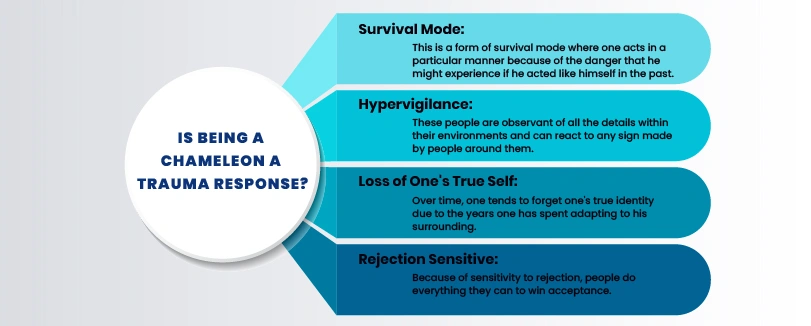
Characteristics of a Chameleon Trauma Response:
Fawning or People Pleasing: It is referred to as being a “fawn” because being a chameleon entails pleasing people to ease or prevent any kind of tension, or just as a measure of self-protection.
- Survival Mode: This is a form of survival mode where one acts in a particular manner because of the danger that he might experience if he acted like himself in the past.
- Hypervigilance: These people are observant of all the details within their environments and can react to any sign made by people around them.
- Loss of One’s True Self: Over time, one tends to forget one’s true identity due to the years one has spent adapting to his surroundings.
- Rejection Sensitive: Because of sensitivity to rejection, people do everything they can to win acceptance.
What is a Social Chameleon?
A social chameleon is the person who easily adapts to new social settings and circumstances. These people stay comfortable and confident in every type of social circle. Just like the chameleon animal that changes its skin according to the environment, social chameleons shift their social skills and adjust themselves to match the current situation. Mimicry may influence:
- Prosocial behavior
- Sense of increased similarity to others
- The Perception of resemblance between different objects
According to the research, mimicking and anticipating a person’s next action is positively related to processing information and an aspect of social intelligence.
However, people with mood disorders like bipolar disorder or depression may face challenges when communicating with others. Experiencing the symptoms of a mood disorder can affect behavior, mimicry, and emotional recognition, which can lead to social withdrawal.
The reasons behind a person becoming a social chameleon can vary. It is natural to adapt to different social environments, so it may happen consciously or unconsciously. A social chameleon may have the following skills:
- Natural personality traits: High emotional intelligence and high empathy traits may allow you to recognize and relate to emotional signals, and you respond to them effectively and quickly.
- Familiarity with high socialization: diverse childhood friend groups, large family dynamics, and cultural practices can all contribute to quick social adaptation.
- Self-preservation: Someone may copy others’ thoughts and behavior as a defence mechanism. It can be a way to tackle anxiety or establish belonging in places.
- Personal Motivations: Some people use social chameleon skills to transform themselves into a position of power, like aligning with the boss at work.
Social Chameleon Psychology Traits Examples
No fixed criterion defines a social chameleon, but some common traits include:
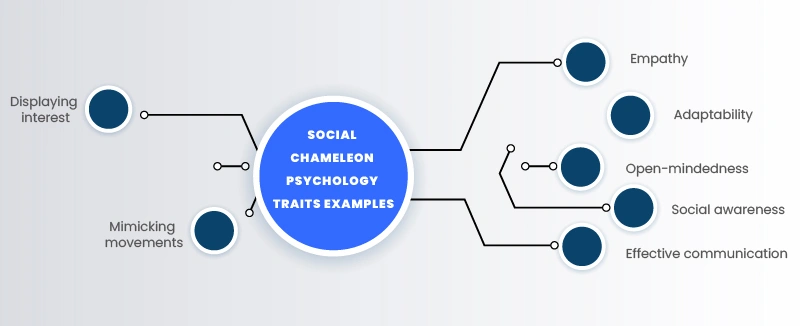
- Empathy: It refers to relating, recognizing, and responding to others’ feelings and thoughts.
- Adaptability: The ability to quickly change your behavior in different situations.
- Open-mindedness: Always try to find a common ground with the beliefs and interests of others.
- Social awareness: Being eager for subtle social signals, such as changes in others’ mood and behavior, and body language.
- Effective communication: They offer engaging conversations and active listening.
- Displaying interest: Asking questions and displaying interest in someone else’s passion.
- Mimicking movements: Copy others’ movements to convey shared experiences, such as nodding, smiling, or arm crossing.
Chameleon Effect Psychology in a Relationship
Adaptability is often seen as a strength in a relationship. It is about being open to compromise, understanding your partner’s needs, and making adjustments. But what happens when you become so adaptable that you lose your identity? People often develop a pattern to blend into the relationship and shape their personality, interests, and emotions to match their partner’s. This phenomenon is referred to as chameleoning in relation to gaining attention, but it means more than that.
Signs You Become a Chameleon in a Relationship
The following are the signs that show you are becoming a chameleon in a relationship.
You Adopt Their Opinions and Interests
The most clear sign of chameleoning is adopting your partner’s likes, dislikes, and opinions as your own. You might watch their favorite TV shows, even those you don’t enjoy, and agree with their political views, which you never considered before. Moreover, you might adopt hobbies that you were never interested in the past. You may barely recognize the person you were before the relationship. If you continuously change your preferences, identity, or values to match your partner, it becomes a compromise or self-loss. Further, it may also cause anxiety in a relationship.
You Struggle to Set Boundaries
After spending years keeping others happy, it feels uncomfortable or unsafe to set boundaries. If you grew up in an environment where expressing your needs led to emotional withdrawal, punishment, or rejection, you will learn that disagreeing means losing connections. So, in relationships, you automatically put others’ comfort above yours. You agree to plans even when they exhaust you, let the hurtful comments slide, and say yes when you actually mean no.
Additionally, your sense of identity becomes entangled with other that declaring your own needs feels like a harm to the relationship. This lack of self-differentiation creates a submissive dynamic where you try to fit in the relationship instead of showing your own thoughts.
You Constantly Seek Approval and Fear Rejection
A study in Social Cognitive and Affective Neuroscience reveals that adolescents who experience social exclusion show enhanced activity in the brain region related to emotional pain. People with high rejection sensitivity show greater distress responses. It particularly happens in the dorsal anterior cingulate cortex (DACC), a brain region associated with processing social pain.
Although it focuses on adolescents, these patterns often persist into adulthood. You may unconsciously become a chameleon in a relationship if early rejection experiences made social approval necessary for your emotional security.
When to Seek Professional Help
You need to seek a specialist’s help for the chameleon effect, when it becomes chronic, causes you to lose yourself, or stems from a trauma response. It is recommended to seek support from a psychiatrist if mimicry leads to loss of authenticity, anxiety, or if you set aside your own values.
✓ Enhanced Self-Esteem & Confidence
✓Improved Self-Awareness✓ Telehealth & In-Person Visits
✓ Most Major Insurances Accepted
Major Situations to Seek Help:
- Losing Self-Identity: When it becomes difficult to distinguish your own personality from others, or you feel like wearing a mask.
- Persistent Inauthenticity: When a certain behavior is not temporary but a persistent survival mechanism, often associated with complex trauma.
- Harmful Compliance: When mimicking others’ behavior disagree with your personal values and impacts your life negatively.
- Emotional Suffering: You hide your true self to gain acceptance when feeling alone, sad, or insecure.
Treatment for Chameleon Effects on Humans
Professional psychologists treat the chameleon effect with psychological approaches when it stems from low self-esteem to borderline personality disorder. Treatments include cognitive-behavioral therapy (CBT), dialectical behavioral therapy (DBT), etc.
Cognitive Behavioral Therapy (CBT)
It challenges cognitive distortions and chameleon thoughts, such as the need to please others and the fear of rejection. The following are CBT techniques used to manage the chameleon effect:
- Identifying Cognitive Distortions: This therapy helps in finding the thoughts behind the behavior, which makes it easy to manage the signs.
- Behavioral Exposure: This technique includes exposing oneself to a social situation without depending on mimicry. It allows an authentic self-disclosure and reduces social anxiety.
- Building Authenticity: It will help individuals to shift from survivor mode to recognize personal needs, values, and tastes.
- Strengthening Self-Concept: CBT helps in creating a strong inner knowing that allows you to not depend on others for immediate social validation.
Dialectical Behavior Therapy (DBT)
Helps people in the identification and management of their intense emotions. It reduces the need to change personalities for other approval.
The following are the DBT skills to reduce signs of the Chameleon Effect:
- Mindfulness or acceptance
- Interpersonal effectiveness
- Emotional Regulation
- Distress tolerance
Treat Chameleon Effect Signs at Inland Empire Behavioral Group
If you find yourself losing your identity in pleasing others and feeling insecure in your relationships, help is here.
Inland Empire Behavioral Group is a trustworthy mental health care provider with comprehensive treatments for mental health conditions. Whether you are experiencing signs of chameleon effect, OCD, or any other condition, you will get personalized treatment.
Our experts have years of experience in mental health care practice. You can also get treatment through telehealth services from the comfort of your home. Our team offers a welcoming and safe environment where you can get help for better mental health without judgment.