A psychological breakdown occurs when emotional and mental distress becomes difficult to manage and starts affecting daily functioning. It is also called a nervous breakdown. These experiences occur during a mental health crisis and develop in response to prolonged stress. They can also be due to underlying mental health conditions.
Although commonly used, psychological breakdown is not a formal mental health diagnosis. The symptoms are associated with anxiety, depression, trauma, or other mental health conditions.
Key Takeaways
- A mental and emotional breakdown is a period of intense psychological distress that interferes with your ability to manage daily responsibilities.
- Chronic stress, major life changes, trauma, and untreated mental health conditions contribute to a psychological breakdown.
- Professional treatment, including psychotherapy and psychiatric medication management when appropriate, can help you manage symptoms and restore emotional stability.
A psychological breakdown indicates an underlying mental health condition that requires professional evaluation. Inland Empire Behavioral Group provides comprehensive assessments and treatment to address your concerns.
What Is a Psychological Breakdown?
A psychological breakdown is a commonly used expression for a loss of emotional stability during a period of significant mental strain. The term is also referred to as a nervous breakdown or a mental and emotional breakdown.
A mental and emotional breakdown is a period of intense psychological distress when emotional demands become difficult to manage, and a person struggles to maintain their usual daily routine. It is also called a psychological breakdown. It is not a formal DSM-5-TR diagnosis. It describes a state of significant distress linked to prolonged stress, an underlying mental health condition, or both.
Researchers describe psychological distress as emotional suffering linked to life stressors that feel difficult to manage Arvidsdotter et al. When distress continues without adequate support, it contributes to emotional and physical exhaustion. If you recognize these difficulties early, seeking professional help can help.
How Can Prolonged Stress Lead to Psychological Distress?
A psychological breakdown does not follow one predictable pattern. However, prolonged stress and unresolved emotional difficulties gradually interfere with your ability to manage everyday demands. Some common changes include:
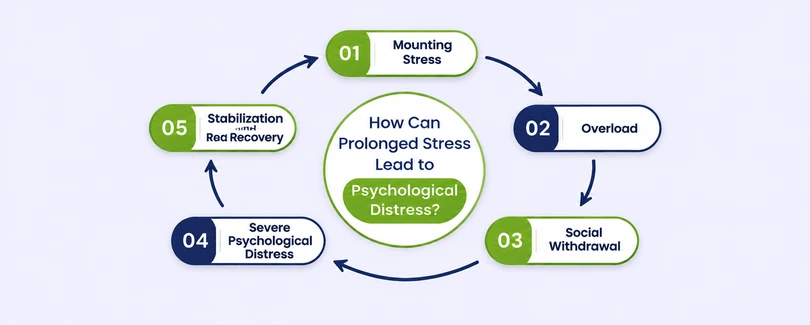
Mounting Stress
You feel constantly exhausted. Sleep and concentration become difficult, even when you try to maintain your usual routine.
Overload
As anxiety intensifies, you experience frequent crying, mood swings, racing thoughts, or panic symptoms.
Social Withdrawal
You begin avoiding people, canceling plans, and losing interest in activities. You also struggle with everyday responsibilities.
Severe Psychological Distress
Emotional symptoms become difficult to manage. It makes it hard to concentrate or complete basic daily tasks. You also experience hopelessness.
Stabilization and Recovery
With professional treatment, you begin to address the underlying causes, manage symptoms, and gradually restore emotional stability and daily functioning.
What are the Signs of a Mental and Emotional Breakdown?
The symptoms of a psychological breakdown can affect your emotions, thoughts, physical health, and behavior. Their intensity varies depending on the contributing factors and any underlying mental health conditions. The common signs include the following:
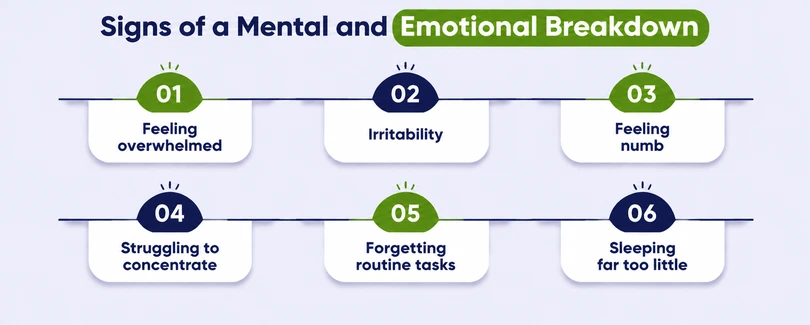
Emotional symptoms
Emotions become difficult to regulate, and you struggle to respond to everyday situations.
- Feeling overwhelmed
- Crying without a clear trigger
- Feeling emotionally drained
- Experiencing sudden anger
- Irritability
- Feeling numb
- Feeling disconnected from people you love
Cognitive symptoms
Psychological distress interferes with concentration, memory, and decision-making.
- Struggling to concentrate
- Difficulty in making simple decisions
- Experiencing racing thoughts
- Forgetting routine tasks
- Feeling detached from yourself or your surroundings
Physical symptoms
Prolonged stress affects your body’s physical responses and contributes to noticeable changes.
- Sleeping far too little
- Experiencing headaches or chest tightness
- Feeling exhausted despite rest
- Noticing major appetite changes
Behavioral changes
Changes in behavior affect your relationships and everyday responsibilities.
- Withdrawing from friends and family
- Missing work or school
- Neglecting hygiene or household tasks
- Increasing alcohol or substance use
What Are the Causes of a Psychological Breakdown?
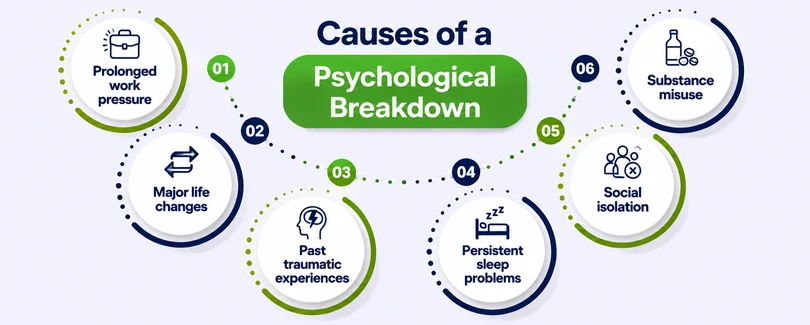
A psychological breakdown progresses when several stressors accumulate and begin to interfere with a person’s ability to manage everyday demands. Sometimes, a major life change triggers distress. In other cases, untreated mental health conditions contribute to it. Common contributing factors include:
- Prolonged work pressure and occupational burnout.
- Major life changes, including divorce, bereavement, job loss, or financial difficulties.
- Past traumatic experiences, such as childhood abuse, neglect, or exposure to violence.
- Persistent sleep problems and physical exhaustion that reduce emotional resilience.
- Social isolation from family, friends, and other trusted people.
- Substance misuse
- Significant hormonal changes
- Physical health problems that affect emotional well-being.
Which Mental Health Conditions Can Contribute to a Psychological Breakdown?
A psychological breakdown is mostly linked to an underlying mental health condition. These conditions make it harder to manage stress, regulate emotions, and keep up with everyday responsibilities. The common mental health conditions include the following:
Major Depressive Disorder
Depression leaves you feeling persistently down or disconnected from activities you once enjoyed. Changes in sleep, appetite, and energy also make daily life harder. An estimated 21 million U.S. adults experienced at least one major depressive episode in 2021 NIMH.
Anxiety Disorders
Anxiety conditions such as generalized anxiety disorder (GAD) and panic disorder cause constant worry, racing thoughts, physical tension, and recurring panic attacks. Over time, these symptoms become difficult to manage.
Post-Traumatic Stress Disorder (PTSD)
If you have experienced trauma, you often struggle with intrusive memories, nightmares, avoidance, or feeling constantly on guard. These symptoms affect your emotional well-being and everyday functioning.
Bipolar Disorder
Bipolar disorder involves episodes of depression and mania or hypomania. These mood changes affect your energy and ability to manage daily responsibilities.
Adjustment Disorder and Acute Stress Disorder
A major life change can trigger intense emotional reactions. Adjustment disorder develops in response to an identifiable stressor. Acute stress disorder occurs after trauma, with symptoms lasting from three days to one month.
How Is a Psychological Breakdown Evaluated?
A mental health professional helps you recover from a nervous breakdown by evaluating your symptoms, medical history, and emotional well-being to understand what is contributing to your distress. The evaluation steps generally include:
- Medical History Review: Your clinician asks about recent stressors, major life changes, and previous mental health disorders.
- Mental Status Examination (MSE): Your clinician evaluates your mood, emotional expression, speech, thought patterns, memory, concentration, and awareness of your surroundings.
- Psychological and Symptom Evaluation: A mental health psychiatrist reviews your symptoms using DSM-5-TR criteria to identify possible conditions.
- Safety and Risk Assessment: Your provider asks about thoughts of self-harm, suicidal thoughts, or other symptoms that may affect your safety. This helps determine the appropriate level of psychological support.
What are the treatment options for psychological Breakdown?
At Inland Empire Behavior Group, our psychiatrist team uses evidence-based approaches to help with mental and emotional breakdown recovery. According to your symptoms and goals, your mental health provider uses the following:
Psychotherapy
Cognitive behavioral therapy (CBT) challenges unhelpful thoughts and builds healthy coping mechanisms. Acceptance and commitment therapy (ACT) teaches you to step back from distressing thoughts.
In a 2023 study of girls with emotional breakdown, ACT reduced cognitive fusion, the habit of treating thoughts as facts, and improved mental health Norouzi et al., n.d..
Psychiatric medication management
When an underlying mental health condition requires medication, a psychiatric provider recommends treatment to help manage symptoms and improve daily functioning.
Depending on your diagnosis and clinical needs, our medication options include:
- Antidepressants (SSRIs and SNRIs): Commonly prescribed for depression and certain anxiety disorders.
- Mood stabilizers: Used to manage mood episodes associated with bipolar disorder.
- Antipsychotic medications: Are prescribed for conditions involving psychosis, including schizophrenia, or certain mood disorders.
How does professional treatment improve emotional regulation?
Talk Therapy helps you identify triggers, understand your emotional responses, and slow overwhelming thoughts and feelings. Skills practice builds the ability to tolerate distress without shutting down. Over time, emotional and behavioral functioning improves at work, at home, and in relationships.
When Should You Seek Professional Help?
You do not have to wait until emotional distress becomes unbearable to seek help.
Book a psychiatric appointment if you notice:
- Emotional distress lasting two weeks or longer
- Difficulty managing work, parenting, or daily responsibilities
- Worsening anxiety or depressive symptoms
- Trauma-related symptoms such as flashbacks, nightmares, or constant alertness
Seek urgent help if you experience:
- Thoughts of suicide or self-harm
- Thoughts of harming someone else
- Loss of touch with reality
In case of emergency, call or text 988 to reach the Suicide & Crisis Lifeline. Call 911 if someone is in immediate danger.
Get Personalized Mental Health Treatment at Inland Empire Behavioral Group
Our licensed therapists provide care built around your symptoms, history, and goals. Your provider creates an individualized treatment plan that combines supports for co-occurring conditions alongside the breakdown itself.
Take the first step. Book an appointment to start a psychiatric evaluation and build your recovery plan. We provide online appointments across California and in-person care in Riverside and Colton. Our team also understands your financial concerns; that’s why we are accepting major insurance plans and welcome new patients as well.